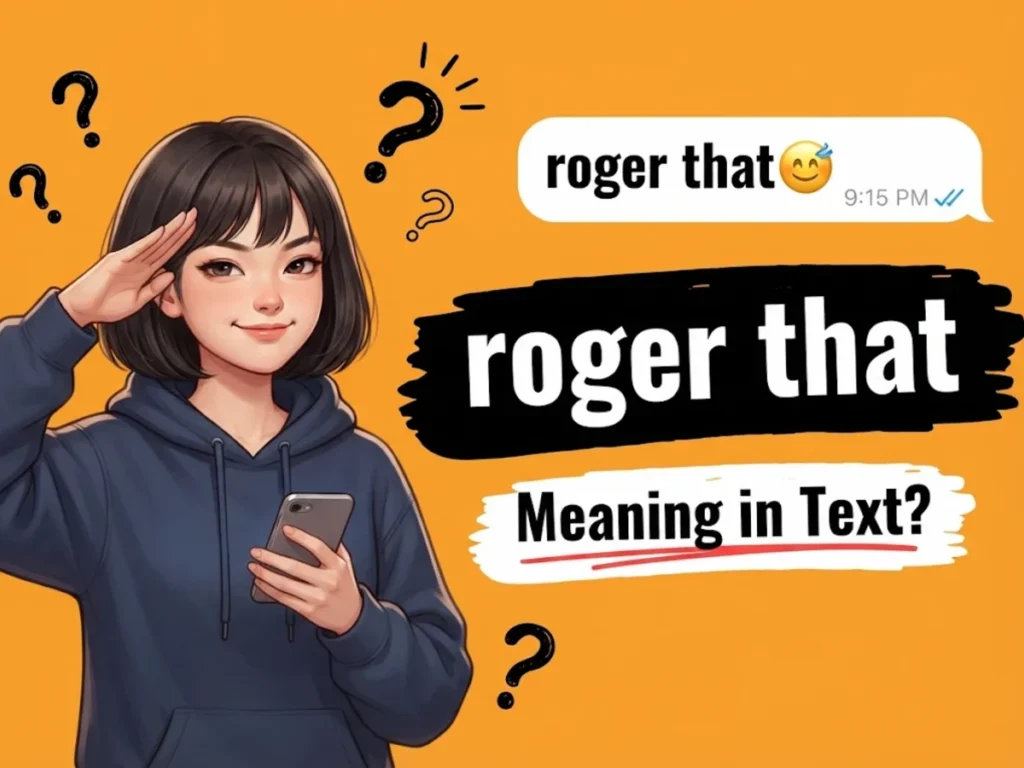
The roger that meaning in a text is “got it” or “message received.” When someone texts you “roger that,” they’re confirming they read your message and understood it, usually with a playful, military-radio flavor. In most chats, it works as a cheerful “OK, will do.”
People look it up because the phrase sounds like it involves someone named Roger. Others wonder whether it means a firm yes or just an acknowledgment. This article explains both, plus where the radio habit came from.
READ MORE: o7 Meaning: Why People Send a Little Salute in Texts
Roger That Meaning in a Text Message
First, “roger that” is a slang phrase, not an acronym. Its job is to acknowledge a message. For example, if a friend texts “Meet at 6, not 5,” replying “roger that” means you saw the change and you’re on board.
Dictionary.com describes it as affirming a statement, roughly like “yes” or “OK.” Its own example is a text reply to “Can you pick up some milk?” In fact, that’s exactly how most people use it today.
Common Ways People Type It
- “Roger that” (the full, classic version)
- “roger” on its own, which is shorter and a bit drier
- “Roger that!” with an exclamation point for extra cheer
- “roger that 🫡” with a salute emoji to lean into the joke
Capital R is common because “Roger” looks like a name. However, all-lowercase “roger that” is just as normal in quick texts.
Where It Appears
Generally, you’ll find it in SMS, iMessage, and WhatsApp, especially when someone is confirming plans or errands. It also shows up in Instagram DMs and Discord. In gaming chats, it fits naturally, since teams pass quick orders back and forth.
Does It Mean Yes or Just “Got It”?
Here’s the detail about the roger that meaning that most people miss. Technically, “roger” only means “received.” In radio talk, agreeing to follow an order was a separate word, “wilco,” short for “will comply.” That’s why you may hear “roger wilco” in old movies.
In everyday texting, though, that line has blurred. When a friend says “roger that” to “grab ice on the way,” they almost always mean they’ll do it. Still, if it’s a request they might not like, “roger that” can be a neutral “noted” rather than a promise. So watch for a follow-up.
Grammar Behind the Roger That Meaning
Grammatically, it’s an interjection. As a result, it stands alone as a complete reply, which is how people use it most. Also, it can open a longer message: “Roger that, I’ll be there by 7.”
“Roger” can even act as a verb in casual speech, as in “Do you roger that?” That use is rarer in texts. Meanwhile, the register is informal. It’s friendly and slightly jokey, but it isn’t slangy enough to confuse most adults.
All caps, such as “ROGER THAT,” adds energy rather than changing the meaning. It often reads like an eager, mock-serious salute.
The Same Phrase in Four Tones
Funny
A: Mission: buy chips. Failure is not an option
B: Roger that, commander
A: Also dip
B: Copy, dip secured
Sarcastic
A: Please don’t be late again
B: roger that, I’ll set nine alarms
A: I’m serious
B: so am I. ten alarms
Playful
A: You’re on snack duty for movie night
B: Roger that 🫡
A: no popcorn this time
B: popcorn removed from mission
Serious
A: The meeting moved to 3:30, room B
B: Roger that, thanks for the heads-up
A: Bring the slides
B: Will do
Who Uses Roger That
People across ages use it, mainly because it’s been around for decades. Parents may use it straight, as a simple “OK.” Meanwhile, friends often use it with a wink, playing up the military-radio drama.
It’s an English phrase that grew out of American radio use. Beyond that, there’s no solid evidence of sharp regional differences in texting, so treat it as widely understood wherever English is spoken.
Real Chat Examples
A coworker confirming a deadline:
A: Can you send the draft by noon?
B: Roger that
A: Thanks, saves me a lot of stress
B: Happy to help
A partner running errands:
A: Grab milk, eggs, and the good bread
B: roger that
A: the GOOD bread
B: understood, no sad bread
A parent setting a curfew:
A: Home by 11, please
B: Roger that
A: I mean it
B: 10:59, promise
Siblings sharing the car:
A: Car needs gas before you return it
B: roger
A: actual gas, not fumes
B: ok fine, real gas
Friends on a road trip:
A: Next exit for food
B: Roger that, captain
A: and bathroom
B: priority one
Teammates in Discord:
A: Push mid, I’ll cover left
B: roger that
A: enemy sniper on roof
B: copy, staying low
A landlord and tenant:
A: The plumber will come Thursday between 9 and 12
B: Roger that, I’ll be home
A: Great, thanks
B: Thank you for sorting it
A coach texting a player:
A: Practice is moved inside due to rain
B: Roger that, coach
A: Bring indoor shoes
B: Will do
Friends splitting chores before a party:
A: You handle music, I’ll handle drinks
B: Roger that
A: no sad songs
B: zero sad songs, got it
A stranger in a marketplace chat:
A: I can pick up the bike at 5
B: Roger that, see you then
A: Cash ok?
B: Cash works
How to Reply When Someone Says It
Because it’s already a confirmation, you often don’t need to answer. Even so, a short reply can close the loop nicely.
Funny Replies
- “Over and out 📻”
- “Excellent work, soldier”
- “The mission is in your hands”
Serious Replies
- “Thanks!”
- “Perfect, appreciate it”
- “Great, let me know if anything changes”
Flirty Replies
This fits only between partners or people already flirting. For instance:
- “Good. Report back to me in person 😉”
- “I love a person who follows instructions”
Neutral or Unbothered Replies
- “👍”
- “cool”
- “ok”
Roger That Meaning Compared With Similar Phrases
| Term | Meaning | Usage Context | Tone | Popularity | Confusion Risk |
|---|---|---|---|---|---|
| Roger that | Message received and understood | Confirming plans, errands, orders | Playful or neutral | High | Low (sometimes read as a name) |
| Copy that | I heard you | Confirming info, often work or gaming | Neutral | High | Low |
| 10-4 | OK, understood (CB radio code) | Jokey confirmations | Retro, playful | Moderate | Medium |
| Wilco | Will comply | Accepting an instruction | Formal or jokey | Low | Medium |
| OK | Agreement | Everything | Neutral | Very high | Low |
| Negative | No (opposite meaning) | Turning down a request in radio style | Playful | Low | Low |
Where the Roger That Meaning Came From
The phrase began in radio, not on the internet. According to Merriam-Webster, “roger” was a former communications code word for the letter R. Its first known use as an interjection dates to around 1941. The R stood for “received,” so saying “roger” meant the message came through.
Dictionary.com adds that NASA’s Apollo broadcasts in the 1960s helped spread it to the public. Later, people started adding “that,” pointing to the message being confirmed. Today the NATO phonetic alphabet uses “Romeo” for R, yet “roger” still survives in radio work and everyday speech.
One popular myth claims “roger” is an acronym for “Received Order Given, Expect Results.” Dictionary.com rejects that story, so don’t repeat it as fact.
Is Roger That Appropriate?
The roger that meaning isn’t rude, and there’s no profanity. In fact, it often sounds friendly and eager. That’s why it works in school chats and family groups without trouble.
At work, it depends on culture. In a casual team chat, “roger that” is fine. With a senior boss or a client, however, a plain “Got it, thanks” may sound more professional. Also, avoid it when someone shares bad news, since it can feel too brisk for an emotional moment.
How It Actually Works in Real Chats
What sets this phrase apart is the built-in role-play. Sending “roger that” turns a dull errand into a tiny mission, with you as the dependable crew member. That small game makes chores feel lighter, and it’s why people add “captain” or a 🫡 so often. The phrase also carries a hint of reliability from its radio past. As a result, it reassures the sender that the message landed, without needing extra words.
FAQs About the Roger That Meaning
What does roger that mean from a guy or a girl?
It means the same thing either way. They’re telling you they received and understood your message. Some people use it playfully with a salute emoji, while others mean a plain “OK.” The surrounding messages reveal which style they’re using.
Is it rude to reply with just “roger that” in a text?
No, it’s generally a polite and complete answer. It confirms you saw the message, which many people appreciate. Still, if the other person shared something personal, a warmer reply works better. “Roger that” suits plans and tasks, not feelings.
What’s the difference between texting it and saying it out loud?
Out loud, of course, tone does most of the work, and it can sound crisp and official. In a text, it often reads as playful, since the radio style feels like a small joke. That’s why people add emojis to it. Either way, the core meaning stays the same.
Does it mean the same thing in a group chat vs a 1-on-1 text?
The meaning doesn’t change. In a group chat, though, several people may send “roger that” to confirm a plan, like a team checking in. One-on-one, it’s a direct acknowledgment to you. Both versions say “message received.”
Does roger that mean “I agree”?
Not strictly. Originally, it meant only that a message was received, while “wilco” meant “will comply.” In casual texts, however, most people use it to mean they’ll do what you asked. If you need a firm yes, ask a follow-up question.
What does “roger that, over and out” mean?
It’s a playful, movie-style way to say “got it, bye.” Real radio procedure treats “over” and “out” as different signals. In texting, though, nobody minds the mix. It simply ends the chat with a fun flourish.
Is “copy that” the same as “roger that”?
They’re very close. In fact, both confirm that you heard a message. “Copy that” can sound a bit more like workplace or dispatch talk. “Roger that” carries more of a military or space-mission flavor.
Final Thoughts on Roger That
In short, the roger that meaning is “message received and understood,” often with an implied “I’m on it.” It comes from radio code, it’s friendly in tone, and it fits most casual conversations.
Usage Tips
- Use it to confirm plans, errands, and quick instructions.
- Add 🫡 or “captain” when you want to play up the joke.
- Follow with details if timing matters, like “Roger that, there by 6.”
- Choose “Got it, thanks” for formal messages.
Common Mistakes
- Assuming it’s always a promise rather than an acknowledgment.
- Using it in reply to sad or serious personal news.
- Spelling it “rodger that,” which looks like a typo.
- Repeating the “Received Order Given” acronym myth.
When to Use It and When to Avoid It
Use it when someone gives you clear information or a simple task. On the other hand, avoid it in emotional conversations or with formal contacts who might find it too casual. In those cases, a full sentence shows more care.