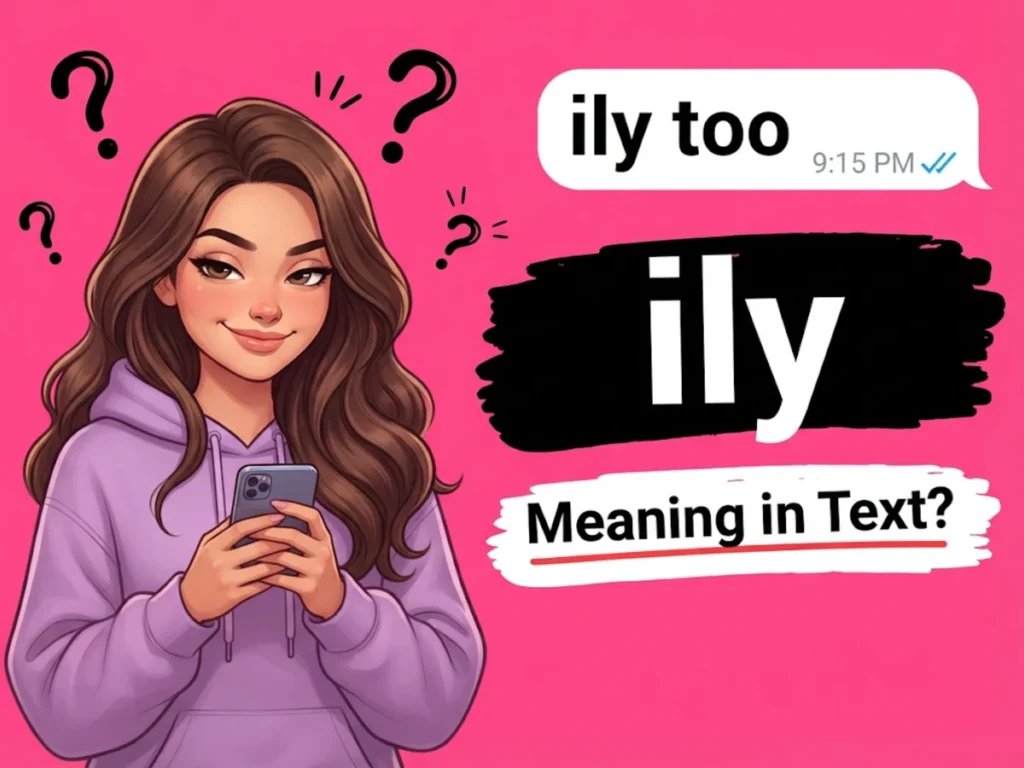
The ILY meaning is “I love you,” shortened to three letters for quick texting. So when someone texts you “ily,” they’re telling you they love you, though often in a lighter, more casual way than typing out the full words.
That lighter feel is exactly why people search for it. Getting “ily” from a crush, a best friend or your mom can mean three slightly different things. In fact, the main confusion isn’t what the letters stand for. Instead, it’s how serious the sender is being.
READ MORE: 1437 Meaning in Text: The Number Code for “I Love You Forever”
What ILY Stands For
ILY is an abbreviation (technically an initialism) of “I love you.” Each letter stands for one word: I, Love, You. It has one main meaning, and that meaning stays the same everywhere.
Dictionary.com defines ILY as an earnest or playful declaration of affection. That definition is helpful, because “ily” really does swing between those two moods. It also notes that ILY is associated with the American Sign Language sign for “I love you.”
Why the ILY Meaning Feels Lighter Than “I Love You”
Here’s what makes ILY unusual. It means exactly the same words as “I love you,” yet most people don’t feel it carries the same weight. Typing three quick letters takes less effort, so it naturally reads as more casual.
For that reason, friends toss “ily” around all the time after a favor or a funny meme. Partners use it as a quick sign-off. However, many people still prefer the full phrase for big, emotional moments, like the first time they say it.
Where you’ll see ILY
Because the ILY meaning is so personal, the abbreviation lives mostly in private messages: SMS, iMessage and WhatsApp chats with close friends, partners and family. It’s also common in Instagram and Snapchat DMs, especially between best friends. Usually it’s typed lowercase, as “ily,” often with a heart emoji.
ILY in Real Conversations
Best friends after a favor
A: I picked up your package from the front desk
B: omg thank you, ily
A: you owe me coffee
B: deal
Partners at the end of the day
A: home safe, about to sleep
B: good, sweet dreams
A: ily
B: ily more
Mom and daughter
A: don’t forget your jacket, it’s cold
B: I have it mom
A: ok, ily
B: love you too
Siblings joking around
A: I finished your fries
B: I hate you
A: ily too 😇
B: unbelievable
Long-distance couple
A: 23 days until I see you
B: I’m counting too
A: ily so much it hurts
B: same, call me later?
Friends in a group chat
A: made it to my new apartment!!
B: so proud of you
C: we’re visiting next weekend
A: ily guys
Coworkers who are close friends
A: I covered your shift tomorrow
B: you’re a lifesaver, ily
A: lunch is on you
B: obviously
Grandparent learning to text
A: what does ily mean?
B: it means I love you, grandma
A: oh! ily too then
B: ❤️
New relationship
A: I had a really good time tonight
B: me too
A: ily… wait, too soon?
B: haha maybe a little, but I like you a lot
Roommates
A: I made extra pasta for you
B: ily, I was starving
A: I know, I heard your stomach
B: rude but fair
Friend after a bad day
A: rough day, just needed to vent
B: I’m here, always
A: thanks for listening
B: ily, you’ve got this
The Different Moods of ILY
Funny
A: I ate the last cookie
B: we’re done
A: ily though
B: that doesn’t fix this
Sarcastic
A: can you drive me to the airport at 4am
B: oh sure, I love being awake at 4am
A: ily 🥰
B: you better
Playful
A: guess who bought concert tickets
B: NO WAY
A: front row
B: ILY ILY ILY
Serious
A: I know things have been hard lately
B: yeah, they have
A: I just want you to know I’m here, and ily
B: thank you. I love you too.
How ILY Works in a Sentence
ILY is a complete sentence on its own, with a subject, verb and object squeezed into three letters. Because of that, it can stand alone as a full message, which is how it’s most often used.
It also fits at the end of a longer text: “thanks for today, ily.” Less often, it starts a message, as in “ily but you’re annoying.”
Capitalization shifts the tone a bit. Lowercase “ily” feels relaxed and natural. On the other hand, “ILY” in all caps reads as louder and more excited, especially when repeated. Either way, it’s always informal, so it never belongs in professional writing.
How to Reply to ILY
Funny replies
- “I know 😌”
- “ily more, I win”
- “prove it, bring snacks”
Serious replies
- “I love you too.”
- “That means a lot. Love you.”
- “I really needed that today, love you.”
Flirty replies
- “Say it again 😏”
- “Only if you say it in person next time.”
- “ily more and I’m not arguing about it.”
Neutral or unbothered replies
- “❤️”
- “love ya”
- “same”
If a casual friend sends ILY, a heart emoji or “love ya” is usually enough. With a partner, however, matching the energy with words tends to land better.
Where ILY Came From
ILY comes from texting and instant messaging culture rather than a meme or viral video. Early phones had small keyboards and character limits, so people shortened common phrases into initials. “I love you” was one of the most common phrases people typed, which made it a natural candidate.
Dictionary.com links it to digital communication and also notes its association with the ASL “I love you” handshape. Still, ILY didn’t need a trend to catch on. It simply spread because people say “I love you” constantly.
Who Uses ILY
In general, teens and young adults use ILY the most, especially Gen Z, who often send it to friends as casually as “thanks.” Millennials use it too, though some lean toward “love ya” or “love you” spelled out. Meanwhile, parents and grandparents are increasingly picking it up from their kids.
Also, it’s understood across English-speaking countries. Since it’s simply the initials of a common phrase, there’s no strong regional difference.
ILY Compared With Similar Terms
| Term | Meaning | Usage Context | Tone | Popularity | Confusion Risk |
|---|---|---|---|---|---|
| ILY | I love you | Friends, partners, family | Warm, casual | Very high | Low |
| ILYSM | I love you so much | Extra affection | Excited | High | Low |
| 143 | I love you (letter count) | Number code in texts | Cute, retro | Medium | Medium |
| IMY | I miss you | Long distance or after time apart | Tender | High | Low |
| XOXO | Hugs and kisses | Sign-off | Affectionate | High | Low |
| IHY | I hate you | Joking or angry texts (opposite) | Teasing or harsh | Medium | Medium |
Is ILY Appropriate?
ILY isn’t rude or explicit, so it’s safe in any personal chat. Even so, think about the relationship. Sending “ily” to a boss, teacher or new acquaintance would feel strange and overly personal.
Also consider timing. In a new relationship, a casual “ily” can feel like a big step if you haven’t said “I love you” in person yet. In that case, it’s often better to say it face to face first.
What Makes ILY Last in Texting
The most interesting thing about ILY is that it lets people say “I love you” without the pressure of the full phrase. Friends who might feel awkward typing “I love you” will happily send “ily” after a small favor. So the abbreviation has created its own social space: it’s affection with a lower stakes feel. In practice, the reply often reveals more than the original message. A quick “ily2” keeps things light, while “I love you too” in full turns a casual moment into a sincere one.
ILY Meaning FAQs
Is it rude to reply with just “ily” in a text?
No, it’s not rude at all, so don’t worry. “Ily” alone is a common, warm reply. That said, if someone just shared something emotional, a short “ily” might feel too quick. In those moments, adding a few sincere words helps.
What’s the difference between texting ILY and saying it out loud?
For example, out loud people almost always say the full words, and voice adds sincerity. Texting ILY, on the other hand, takes less effort and often feels more casual. As a result, many people save the spoken version for serious moments. The letters are for everyday affection.
Does ILY mean the same thing in a group chat vs a 1-on-1 text?
The words stay the same, but the feeling changes. In a group chat, “ily guys” is friendly appreciation for everyone. In a one-on-one text, it feels more personal. So read the setting before deciding how serious it is.
Is ILY romantic or friendly?
It can be either, because the ILY meaning depends on the relationship. Friends send ILY all the time without any romantic meaning. Between partners, though, it’s usually romantic. Your relationship with the sender is the best clue.
Should I say ILY for the first time over text?
Many people prefer saying it in person for the first time. A text can feel less meaningful or easy to misread. Still, some couples are comfortable with it, especially long distance. Go with what feels right for your relationship.
What does “ily2” mean?
It means “I love you too.” Usually, people use it as a quick reply to ILY. It’s casual and friendly, so it fits best with friends or partners who already text this way. For a more heartfelt reply, spelling it out works better.
Is ILY weaker than “I love you”?
Many people feel that way, because typing three letters takes less effort. However, the meaning itself isn’t weaker. It depends on who sends it and when. A late-night “ily” from a partner can still mean a lot.
Final Word on the ILY Meaning
The ILY meaning is simple: “I love you.” What changes is the weight behind it, which depends on the relationship and the moment. Friends use it casually, while partners and family often mean it more deeply.
Usage tips
- Use “ily” for everyday affection with close friends and family.
- Spell out “I love you” for big emotional moments.
- Add a heart emoji to keep it warm.
- Match the other person’s style when replying.
Common mistakes
- Sending “ily” to a coworker or boss.
- Saying it for the first time in a new relationship by text without thinking.
- Assuming every “ily” is romantic.
- Replying with just “k” to an “ily.”
In short, text “ily” freely to people you’re close to, and save the full words for moments that deserve them.