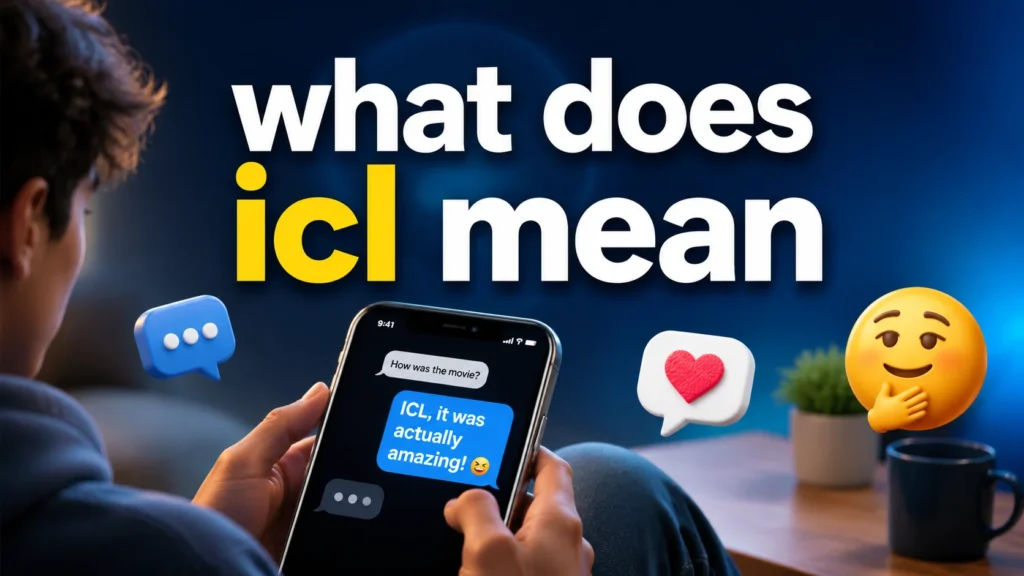
If you’ve come across “ICL” in a message and paused for a second, you’re not alone.
It’s one of those short, casual expressions that pop up in chats, comments, and captions—yet its meaning isn’t always obvious. People search for what does ICL mean because it feels important to understand the tone behind it. Is it serious? Funny? Emotional?
The confusion usually comes from context. Unlike simple abbreviations, “ICL” carries a subtle emotional layer. It’s not just about what the words mean—it’s about how they feel.
In this guide, you’ll not only understand the meaning of “ICL,” but also when to use it, when to avoid it, and what it reveals about modern communication.
What Does ICL Mean – Quick Meaning
ICL stands for: “I Can’t Lie.”
It’s used to express honesty, sincerity, or a moment of real truth—often in a casual or emotional way.
Simple Breakdown:
- A way of saying “honestly”
- Used before sharing a real opinion or feeling
- Often adds emotional weight to a sentence
Examples:
- “ICL, that movie made me cry.”
- “ICL, I didn’t expect you to do that.”
- “ICL, you’ve been on my mind lately.”
Think of it as a softer, more personal version of saying “to be honest.”
Origin & Background
“ICL” comes from everyday spoken English—specifically the phrase “I can’t lie.”
Over time, as texting culture grew, people started shortening phrases to type faster and sound more natural. That’s how it became popular.
Cultural Influence:
The phrase gained traction through:
- Social media captions
- Messaging apps like WhatsApp and Instagram
- TikTok comments and storytelling posts
It reflects a shift in how people communicate today—less formal, more expressive, and emotionally direct.
Evolution:
Originally, “I can’t lie” was used in face-to-face conversations. But online, “ICL” became a quick way to:
- Add honesty
- Soften opinions
- Show vulnerability without sounding too serious
Real-Life Conversations
WhatsApp Chat
Person A: You still mad at me?
Person B: ICL, I was… but I’m over it now.
Instagram DMs
Person A: Did you like my post?
Person B: ICL, that was your best one yet 🔥
TikTok Comments
Person A: This trend is getting old
Person B: ICL, I still laugh every time 😂
Text Message
Person A: Be honest, do I look tired?
Person B: ICL… yeah, but not in a bad way 😅
These conversations show how “ICL” adds a layer of honesty—sometimes soft, sometimes playful.
Emotional & Psychological Meaning
“ICL” isn’t just about truth—it’s about emotional honesty.
When someone uses it, they’re signaling:
- “I’m being real with you”
- “This is how I genuinely feel”
- “I’m dropping the filter for a moment”
It creates a sense of trust in conversation.
Why People Use It:
- To sound more authentic
- To ease into honesty
- To soften potentially sensitive statements
Personal Scenario:
Imagine telling a friend:
“ICL, I felt a bit left out yesterday.”
It doesn’t sound aggressive. It sounds open, vulnerable, and human. That’s the power of “ICL”—it makes honesty feel safer.
Usage in Different Contexts of
Social Media
People use “ICL” in captions or comments to:
- Share real opinions
- React emotionally
- Connect with others authentically
Example:
“ICL, this song hits different at night.”
Friends & Relationships
Among friends, it adds honesty without tension.
Example:
“ICL, I missed hanging out with you.”
Work / Professional Settings
Here’s where things change.
“ICL” is too casual for formal communication. In emails or meetings, it may seem unprofessional.
Better alternative:
“To be honest” or “In my opinion”
Casual vs Serious Tone
- Casual: Friendly honesty
- Serious: Emotional truth or confession
Tone depends on context and delivery.
When NOT to Use
Even though “ICL” is popular, it’s not always appropriate.
Avoid Using It:
- In formal emails or job applications
- With people unfamiliar with slang
- In serious conflicts where clarity matters
- In cross-cultural communication where meaning may be unclear
Why It Matters:
Misusing slang can make you sound careless—or worse, misunderstood.
Common Misunderstandings
1. Thinking It Means Something Negative
Some assume “ICL” is criticism. In reality, it’s neutral—it just introduces honesty.
2. Tone Confusion
“ICL, you’re different” can be:
- A compliment
- A concern
- Or even sarcasm
Context is everything.
3. Literal Interpretation
It doesn’t mean someone literally can’t lie. It’s just a conversational phrase.
Comparison Table
| Expression | Meaning | Tone | Usage |
| ICL | I can’t lie | Honest, casual | Personal opinions |
| TBH | To be honest | Neutral | General honesty |
| NGL | Not gonna lie | Slightly informal | Surprising truth |
| FR | For real | Emphasis | Agreement |
| IMO | In my opinion | Formal-ish | Discussions |
| Cap | Lie / false | Playful | Calling out dishonesty |
Key Insight
“ICL” stands out because it blends honesty with emotional softness—it feels more personal than “TBH” and less blunt than “NGL.”
Variations / Types
- ICL tho – Adds emphasis (“I can’t lie though”)
- ICL fr – Strong honesty + emphasis
- ICL, you right – Agreement with sincerity
- ICL, that hurt – Emotional honesty
- ICL, I didn’t know – Genuine admission
- ICL… – Builds suspense before truth
- ICL, same – Relatable agreement
- ICL, that’s crazy – Honest reaction
- ICL, I tried – Honest effort admission
- ICL, I miss that – Nostalgic honesty
Each variation adjusts tone slightly while keeping the core meaning.
How to Respond When Someone Uses It
Casual Replies
- “Haha I get you”
- “Fair enough”
- “Same here honestly”
Funny Replies
- “ICL, you always got something to say 😂”
- “You say ‘ICL’ like you ever lie 😭”
Mature Replies
- “I appreciate your honesty”
- “That makes sense, thanks for being real”
Respectful Replies
- “Thanks for sharing that”
- “I understand where you’re coming from”
Regional & Cultural Usage
Western Culture
Widely used, especially among Gen Z. Casual honesty is valued.
Asian Culture
Less common in direct form. People may prefer softer or indirect expressions of honesty.
Middle Eastern Culture
Used mainly in online spaces. Offline, communication tends to be more formal.
Global Internet Usage
“ICL” is now part of global slang culture—understood across platforms regardless of location.
Generational Differences
- Gen Z: Uses it naturally and frequently
- Millennials: Understand it but use it less
- Older generations: May find it confusing
Is It Safe for Kids?
Yes, “ICL” is generally safe.
It doesn’t contain offensive meaning. However, like all slang, kids should understand context and when it’s appropriate—especially in school or formal settings.
FAQs
1. What does ICL mean in texting?
It means “I can’t lie,” used to express honesty or a real opinion.
2. Is ICL the same as TBH?
Not exactly. Both show honesty, but “ICL” feels more emotional and conversational.
3. Can I use ICL in professional emails?
No, it’s too casual. Use “to be honest” instead.
4. Is ICL rude?
Not by itself. Tone and context determine whether it sounds positive or negative.
5. Why do people use ICL?
To sound genuine, relatable, and emotionally honest.
6. Is ICL popular on TikTok?
Yes, especially in comments and captions expressing real reactions.
7. Can ICL be sarcastic?
Sometimes—but that depends entirely on context and delivery.
Conclusion
“ICL” may be just three letters, but it carries a surprisingly human message.
It’s about honesty—not the harsh kind, but the kind that feels real, relatable, and emotionally aware. In a world where communication is fast and often filtered, expressions like “ICL” help people slow down and speak from the heart.
Use it when you want to be genuine.
Avoid it when clarity matters more than style.
And most importantly—understand the feeling behind it, not just the words.
Because in modern communication, meaning isn’t just written.
It’s felt.