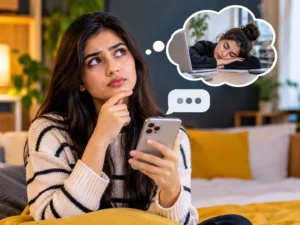
TLC in text usually means “Tender Loving Care.” When someone texts you “you need some TLC,” they mean you need extra care, kindness, comfort, or attention. It can sound affectionate, supportive, playful, or occasionally sarcastic depending on the conversation.
What Does TLC Mean in Text?
TLC is an abbreviation/initialism for “Tender Loving Care.” In everyday texting, it describes giving someone or something gentle, thoughtful, and caring attention.
For example:
“You’ve had such a stressful week. You need some TLC.”
Here, the person isn’t using a secret slang code. They simply mean you deserve some care, comfort, and attention.
Dictionaries define TLC as an informal abbreviation for “tender loving care,” meaning kindness, love, and attention. (Cambridge Dictionary)
The expression can apply to:
- A sick or tired person
- Someone going through a difficult time
- A romantic partner
- A friend who needs support
- A pet
- A plant
- A car, house, or other object that needs attention
For instance:
“My car needs some TLC.”
That doesn’t mean the car needs emotional affection. It means it needs maintenance, repairs, cleaning, or general attention.
What Does TLC Mean When Someone Texts It to You?
When someone sends “TLC” directly to you, the meaning depends on the surrounding message.
If you say:
“I’ve been sick all week.”
And they respond:
“You need some TLC ❤️”
they’re probably expressing care and sympathy.
If your partner says:
“Come over. You need TLC.”
it may have a more affectionate or romantic tone.
If your friend says:
“That old laptop needs some TLC 😂”
they’re talking about giving the laptop some attention or repairs.
So, TLC doesn’t automatically mean romance. Context determines whether it feels friendly, caring, affectionate, or humorous.
TLC Meaning in Different Texting Platforms
SMS and iMessage
In ordinary SMS and iMessage conversations, TLC usually keeps the same meaning: Tender Loving Care.
You might see:
“Hope you’re feeling better. Sending TLC.”
or:
“You deserve some TLC after today.”
It’s particularly natural when someone is discussing stress, illness, exhaustion, relationships, or personal care.
WhatsApp users also use TLC to mean Tender Loving Care.
For example:
“You’ve been working nonstop. Take a break and get some TLC.”
The abbreviation doesn’t have a special WhatsApp-only meaning.
Instagram DMs
In Instagram DMs, TLC can still mean Tender Loving Care, especially when friends or partners are discussing emotions, relationships, self-care, or difficult situations.
“Girl, you need some TLC after that week 😭❤️”
Snapchat
Snapchat conversations can use TLC in the same way. The tone may become more playful because of emojis, disappearing messages, and casual conversation.
Discord
In Discord chats and DMs, TLC can mean Tender Loving Care, although its interpretation depends heavily on the topic being discussed.
There isn’t a separate universal “Discord meaning” for TLC.
Does TLC Have Different Spellings?
You may see:
- TLC
- tlc
- T.L.C.
- t.l.c.
The meaning normally stays the same.
TLC looks slightly more established or deliberate, while tlc can feel more casual in a text.
For example:
“You need some TLC ❤️”
feels slightly more polished than:
“u need some tlc lol”
Neither version changes the basic definition.
TLC Tone and Context Variations
TLC is flexible. The same three letters can sound different depending on who sends them and why.
Funny TLC
A friend might use TLC jokingly when something is clearly falling apart.
A: “My room is officially a disaster.”
B: “I saw the pictures 😭”
A: “Don’t judge me.”
B: “That room needs serious TLC 😂”
Here, TLC means care, cleaning, and attention, but the message is humorous.
Sarcastic TLC
TLC can also appear sarcastically when someone jokingly exaggerates how much attention something needs.
A: “My car made another weird noise.”
B: “Again?”
A: “Yep. It’s becoming expensive.”
B: “Sounds like it needs some TLC… and your entire paycheck 😂”
The phrase itself is positive, but the surrounding message creates the sarcasm.
Playful TLC
Between close friends or romantic partners, TLC can sound affectionate and teasing.
A: “I’m exhausted.”
B: “Come over.”
A: “Why?”
B: “You need some TLC and snacks.”
Here, TLC means comfort and attention, with a playful tone.
Serious TLC
TLC can also communicate genuine emotional support.
A: “Things have been really difficult lately.”
B: “I’m sorry you’re dealing with all that.”
A: “I’m honestly exhausted.”
B: “Take some time for yourself. You deserve some TLC.”
In this situation, TLC means genuine care and emotional support.
Real Text Conversations Using TLC
1. Between Friends
A: “I’ve been studying since 8 this morning.”
B: “That’s insane.”
A: “I still have two chapters left.”
B: “Forget the books for an hour. You need some TLC.”
2. Between Romantic Partners
A: “Today was awful.”
B: “What happened?”
A: “Work was stressful and then I missed my train.”
B: “Come over. I’ll give you some TLC ❤️”
Here, the romantic context makes TLC sound more affectionate.
3. A Sick Friend
A: “My fever finally went down.”
B: “Thank goodness.”
A: “Still feeling terrible though.”
B: “Rest today. Your body needs some TLC.”
4. Talking About a Pet
A: “How’s Max doing?”
B: “He’s okay, just tired after the vet.”
A: “Aww.”
B: “He’s getting plenty of TLC tonight.”
Here, TLC means gentle care and attention, not romantic affection.
5. Talking About a Car
A: “Are you still driving that old Honda?”
B: “Unfortunately 😂”
A: “It actually looks pretty rough.”
B: “Yeah, it needs some TLC.”
Here, TLC means maintenance or repairs.
6. Between Siblings
A: “Mom says the garden looks terrible.”
B: “She’s not wrong.”
A: “We should fix it this weekend.”
B: “Definitely. Those plants need some TLC.”
7. Coworkers
A: “The presentation deck looks messy.”
B: “I noticed that too.”
A: “I’ll clean up the slides tonight.”
B: “Good call. It just needs a little TLC.”
This is a casual workplace use, referring to extra attention or improvement.
8. Someone Offering Comfort
A: “I don’t really feel like talking.”
B: “That’s okay.”
A: “I just want to disappear for a while.”
B: “Take your time. Sending you some TLC.”
9. A Parent Texting an Adult Child
A: “I’ve been working nonstop this week.”
B: “You need to slow down.”
A: “I know, but there’s so much to finish.”
B: “Get some rest tonight. You need TLC.”
10. A Playful DM
A: “My hair looks terrible today.”
B: “It really doesn’t.”
A: “I’m not convinced.”
B: “Your hair just needs a little TLC 😂”
11. A House That Needs Attention
A: “Are you still planning to renovate the kitchen?”
B: “Eventually.”
A: “It definitely needs work.”
B: “Yeah, the whole house needs some TLC.”
12. Self-Care
A: “I’m taking Saturday completely off.”
B: “Good.”
A: “No work, no studying, nothing.”
B: “That’s the TLC you needed.”
How TLC Works Grammatically
Part of Speech
TLC functions as a noun, representing the idea of care or attention.
For example:
“She needs some TLC.”
You can think of it as replacing the phrase “tender loving care.”
Where Does TLC Appear in a Sentence?
It commonly appears after words such as:
- need
- give
- get
- deserve
- send
- show
Examples:
“You need some TLC.”
“Give your car some TLC.”
“You deserve some TLC.”
“Sending you lots of TLC.”
Can TLC Stand Alone?
Yes, especially in casual texting.
For example:
A: “Rough day.”
B: “TLC ❤️”
The standalone reply is understandable because both people already know the context.
However, a standalone “TLC” can feel vague if the recipient doesn’t know what you mean.
Can TLC Appear Mid-Sentence?
Absolutely.
“Your old laptop could use some TLC.”
“I’m giving myself some TLC this weekend.”
Is TLC Formal or Informal?
TLC is primarily informal. Cambridge and Oxford both identify the expression as informal. (Cambridge Dictionary)
It’s natural in:
- Text messages
- DMs
- Casual emails
- Conversations
- Wellness discussions
- Everyday speech
For highly formal writing, spell out the idea instead of relying on TLC unless the context specifically calls for the abbreviation.
How to Reply to TLC in a Text
Your response should match the tone of the original message.
Funny Reply
“I accept TLC in the form of pizza 😂”
Serious Reply
“Thank you. I really needed to hear that.”
Flirty Reply
“And what exactly does your TLC include? 👀”
This works when the existing conversation already has a romantic or flirty tone.
Neutral Reply
“Thank you, I appreciate that.”
You don’t have to match someone’s affectionate language if you want to keep the conversation casual.
TLC vs Similar Terms
| Term | Meaning | Usage Context | Tone | Popularity | Confusion Risk |
|---|---|---|---|---|---|
| TLC | Tender Loving Care | Care, comfort, attention | Warm | High | Medium |
| Care | Concern or attention | General conversation | Neutral | Very high | Low |
| Support | Help or encouragement | Emotional/practical situations | Supportive | Very high | Low |
| Self-care | Looking after your own well-being | Wellness and personal life | Positive | High | Medium |
| XOXO | Hugs and kisses | Affectionate messages | Affectionate | High | Medium |
| IDGAF | I don’t give a f*** | Opposite emotional attitude | Dismissive | High | Medium |
The important distinction is that TLC specifically emphasizes gentle, caring attention. “Support” can be practical, while “TLC” usually sounds warmer and more personal.
Who Uses TLC in Texting?
Age Groups
TLC isn’t limited to one age group. Unlike some newer internet abbreviations, it comes from the much older phrase “tender loving care.”
That makes it different from slang created specifically through newer social-media culture.
Gen Z vs. Millennials
Both Gen Z and Millennials can use TLC in casual digital communication.
A younger texter may write:
“You need some tlc fr ❤️”
while another person might write:
“You definitely need some TLC.”
The difference is more about individual texting style than a completely different meaning.
US, UK, and Global Usage
TLC is widely understood in English-speaking contexts, including the United States and United Kingdom. Major English dictionaries list the abbreviation with the “tender loving care” meaning. (Cambridge Dictionary)
Its meaning generally doesn’t change just because the conversation takes place in a different English-speaking country.
Origin and Internet Culture
TLC did not originate as a TikTok slang term.
The abbreviation comes from the established phrase “tender loving care,” which has been used in English for decades. Dictionary.com places the expression in the second half of the 20th century and notes that it was originally associated with compassionate caregiving before expanding into broader everyday use. (Dictionary.com)
That history matters because TLC is sometimes incorrectly treated as modern internet slang. People use it online today, but the expression predates social media by decades.
Over time, TLC moved naturally from spoken and written English into texting. Shortening “tender loving care” to three letters makes it convenient for casual digital conversations while preserving the affectionate idea behind the original phrase.
TLC can also have unrelated meanings outside everyday conversation. For example, dictionaries list thin-layer chromatography as another meaning, while TLC is also used as the name of a television network. (Merriam-Webster)
That’s why context matters.
Is TLC Rude or Offensive?
No. TLC is not rude, offensive, or profanity.
In texting, it generally has a positive meaning related to care, kindness, comfort, or attention.
It is usually safe for:
- Friends
- Family
- Partners
- Casual coworkers
- Supportive conversations
However, the tone can become sarcastic if the surrounding message is sarcastic.
For example:
“Your room needs some serious TLC.”
This could be a genuinely helpful observation or a joke about how messy the room is.
Is TLC Appropriate at School or Work?
Generally, yes, in informal communication.
For example, a coworker might say:
“The report needs a little TLC before we send it.”
That’s understandable and fairly casual.
However, in a formal report, you would usually write “additional attention,” “revision,” “maintenance,” or “care” instead of TLC.
Real-World Observation: Why TLC Works So Well in Texts
TLC is interesting because it communicates a fairly large idea in only three letters. Instead of typing “you deserve some tender loving care and attention,” someone can write “you need some TLC,” and the recipient immediately gets the general message. It also works across very different situations: you can give TLC to a person, pet, plant, car, house, or even a project. That flexibility helps explain why the abbreviation has remained useful even as newer texting slang has appeared.
Frequently Asked Questions
What does TLC mean in texting?
TLC usually means “Tender Loving Care” in texting. It refers to kindness, affection, comfort, or extra attention given to someone or something. The exact tone depends on the conversation.
Is TLC a slang word?
TLC is better described as an informal abbreviation or initialism rather than a slang word. It comes from the established phrase “tender loving care.” Dictionaries classify it as an informal abbreviation.
Is TLC romantic?
It can be, but it isn’t automatically romantic. A partner might use TLC to express affection, while a friend might use it simply to offer emotional support. The relationship and surrounding words determine the tone.
Is it rude to reply with just “TLC” in a text?
Not necessarily. A standalone “TLC” can work when the context is already clear, such as responding to someone who says they had a difficult day. If the recipient doesn’t know what you’re referring to, however, the reply may feel confusing or incomplete.
What’s the difference between texting TLC and saying it out loud?
The meaning is essentially the same. In writing, TLC is convenient because it saves space, while in speech people normally pronounce the individual letters or say “tender loving care.”
Does TLC mean the same thing in a group chat and a 1-on-1 text?
The core meaning stays the same, but the tone can change. In a 1-on-1 conversation, TLC may sound more personal or affectionate. In a group chat, it may simply mean encouragement or a joke depending on the discussion.
Can TLC be used for things instead of people?
Yes. This is one of the most common uses outside emotional conversations. A person might say a car, house, garden, computer, or project needs TLC when it requires maintenance, cleaning, repair, or extra attention.
What are the other meanings of TLC?
Outside casual texting, TLC can refer to different things. Examples include thin-layer chromatography, The Learning Channel, and other specialized abbreviations. In a normal personal text, though, “Tender Loving Care” is usually the intended meaning.
Conclusion
TLC meaning in text is usually “Tender Loving Care.” It describes kindness, comfort, affection, or extra attention toward someone or something.
You can use it with a friend who is having a rough day, a partner who needs comfort, a pet recovering from illness, or even a car that needs repairs. Its meaning stays consistent across SMS, iMessage, WhatsApp, Instagram DMs, Snapchat, and Discord.
Usage Tips
- Use TLC when you want to express care or attention casually.
- Read the surrounding conversation before assuming it’s romantic.
- Use lowercase tlc for a more casual texting style if that matches your conversation.
- Spell out “tender loving care” when clarity or formality matters.
Common Mistakes
- Assuming TLC is always romantic.
- Assuming it is a new TikTok-created slang term.
- Treating every use as emotional; objects can need TLC too.
- Confusing the texting meaning with specialized meanings such as thin-layer chromatography.
When to Use or Avoid TLC
Use it in friendly texts, supportive messages, relationship conversations, casual DMs, and informal discussions about things that need attention.
Avoid relying on it in highly formal academic, legal, or professional writing where the full meaning would be clearer.
PAA-Optimized Questions
What does TLC stand for in texting?
TLC stands for Tender Loving Care. In a text, it usually means giving someone or something extra kindness, attention, comfort, or care.
What does it mean when a girl texts you TLC?
Usually, she means Tender Loving Care. Depending on your relationship, it could be friendly support, genuine concern, or affectionate/romantic attention.
What does TLC mean from a guy?
A guy using TLC usually means Tender Loving Care as well. Whether it sounds friendly or romantic depends on the surrounding conversation.
What does “you need some TLC” mean?
It means the person thinks you need care, comfort, rest, attention, or affection. It can also be used humorously for something that needs repair or improvement.
Can TLC mean love?
Yes, TLC can communicate love or affection, but it does not necessarily mean romantic love. It can describe caring behavior between friends, family members, partners, or toward pets and possessions.
Is TLC still used in texting?
Yes. TLC remains understandable and useful in casual English texting because it is a familiar abbreviation for “tender loving care.”