If you’ve spent any time on social media lately, chances are you’ve seen someone say, “That’s pure copium,” or “Bro is inhaling copium.”
At first glance, the word sounds strange, funny, and oddly dramatic.
That’s exactly why so many people search for the term “copium meaning.”
Some think it’s a joke. Others assume it’s an insult. Meanwhile, many people use it casually in memes, gaming chats, TikTok comments, and even sports debates without fully understanding the emotional layer behind it.
The truth is, “copium” is more than random internet slang. It reflects how modern people deal with disappointment, embarrassment, failed expectations, and emotional self-protection online.
Once you understand the word, you start noticing it everywhere.
Copium Meaning – Quick Meaning
What Does “Copium” Mean?
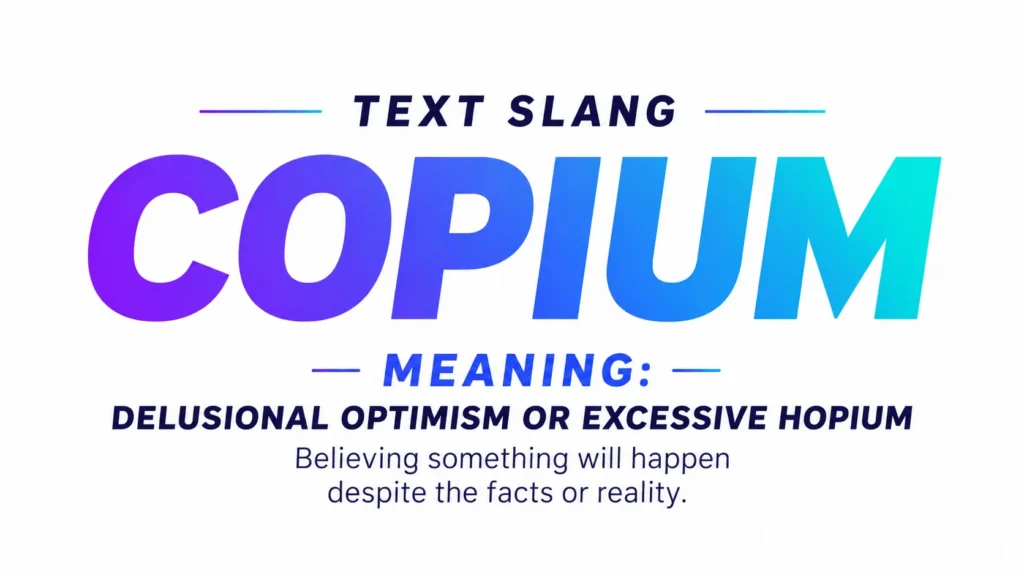
“Copium” is internet slang used to describe someone who is emotionally coping with disappointment by denying reality or creating unrealistic hope.
The word combines:
- Cope = emotionally dealing with failure or disappointment
- Opium = a drug associated with numbness or escape
Together, “copium” humorously suggests someone is “drugging themselves with fake hope” to avoid accepting reality.
Simple Definition
Copium means:
- Pretending things are okay when they clearly are not
- Making excuses after failure
- Holding onto unrealistic optimism
- Refusing to accept an obvious loss or disappointment
Quick Examples
“Our team lost again, but fans are still breathing copium.”
“He keeps saying she’ll text back. That’s serious copium.”
“Investors after the market crash: unlimited copium.”
Is It Always Negative?
Not completely.
Sometimes people use “copium” jokingly about themselves. It can be playful, sarcastic, self-aware, or mildly insulting depending on the tone.
Origin & Background
Where Did “Copium” Come From?
The word became popular in online gaming and meme communities around the late 2010s.
It started appearing heavily on:
- Twitch streams
- Reddit forums
- Discord servers
- Gaming message boards
- Meme pages
Gamers would use it after losing tournaments or defending weak teams and players.
Instead of admitting defeat, people created excuses. That behavior became associated with “copium.”
The Meme Culture Connection
Internet culture loves exaggerated emotional language.
Words like:
- Doomscrolling
- Delulu
- Simp
- Cringe
- Cope
all became popular because they describe emotions in short, memorable ways.
“Copium” exploded because it perfectly captured modern online denial with humor attached.
Social Media Made It Bigger
TikTok and Twitter helped the slang move beyond gaming.
Now people use it for:
- Dating drama
- Celebrity fandoms
- Politics
- Sports
- Crypto investing
- Academic stress
- Personal life disappointments
The term evolved from niche internet slang into mainstream digital language.
Why People Connected With It
Deep down, almost everyone has experienced emotional coping.
Sometimes we all try to convince ourselves:
- “Maybe it’ll still work out.”
- “It’s not that bad.”
- “They probably didn’t mean it.”
- “Next time will be different.”
“Copium” became popular because it turns that universal emotional experience into something humorous and relatable.
Real-Life Conversations
WhatsApp Conversation
Person A:
“I failed the driving test again.”
and
Person B:
“At least the examiner looked nervous too.”
Person A:
“That’s pure copium and we both know it.”
Instagram DM
Person A:
“He viewed my story after three weeks. That has to mean something.”
Person B:
“You’re inhaling industrial-grade copium right now.”
TikTok Comments
Person A:
“This movie is secretly underrated.”
More,
Person B:
“No, the reviews were terrible.”
Person A:
“Let me enjoy my copium in peace.”
Text Message
Person A:
“Our football club can still win the league.”
Or
Person B:
“We’re 15 points behind.”
Person A:
“Don’t destroy my copium.”
Emotional & Psychological Meaning
What Emotion Does “Copium” Express?
At its core, the word reflects emotional self-protection.
People use it when reality feels painful, embarrassing, or disappointing.
Instead of directly facing emotions like:
- rejection
- failure
- heartbreak
- humiliation
- loss
they soften the experience through humor or hopeful denial.
Why People Use It
Modern communication moves fast.
Online culture rewards humor, sarcasm, and emotional shorthand. Saying “copium” instantly communicates:
- denial
- emotional coping
- unrealistic optimism
- meme-level self-awareness
without needing a long explanation.
The Psychology Behind It
Interestingly, “copium” works because people recognize themselves in it.
Everyone copes emotionally sometimes.
A student says:
“I probably didn’t want that scholarship anyway.”
A sports fan says:
“The referee ruined everything.”
Someone after rejection says:
“They were probably too intimidated.”
These are normal human defense mechanisms.
The internet simply gave that behavior a name.
A Realistic Personal Scenario
Imagine waiting all day for someone you really like to reply.
Hours pass.
You tell yourself:
“They’re probably busy.”
Then:
“Maybe their phone died.”
Later:
“They must be thinking carefully before responding.”
At some point, your best friend laughs and says:
“That’s dangerous levels of copium.”
It stings a little because part of you knows it’s true.
That’s why the term feels emotionally powerful.
Usage in Different Contexts
Social Media
This is where “copium” appears most often.
People use it in:
- memes
- reaction videos
- sports debates
- celebrity fandoms
- gaming streams
- crypto discussions
Example:
“Fans saying the sequel will fix everything are on copium.”
Friends & Relationships
Among friends, the word is usually teasing rather than cruel.
Example:
“You think your crush likes you because they reacted to your story? Copium.”
In relationships, it can point out emotional denial gently or sarcastically.
Work & Professional Settings
Using “copium” professionally is risky.
Many workplaces still see internet slang as immature or unclear.
Avoid using it in:
- formal emails
- presentations
- job interviews
- client communication
It may confuse people unfamiliar with meme culture.
Casual vs Serious Tone
In casual conversations, “copium” is playful.
In serious emotional situations, however, it can sound dismissive or insensitive.
For example, joking about “copium” after someone loses a loved one or faces real hardship would feel inappropriate.
Tone matters heavily.
When NOT to Use It
During Serious Emotional Situations
Avoid using the word when someone is:
- grieving
- depressed
- emotionally vulnerable
- discussing trauma
- facing serious failure
It may come across as mocking their emotions.
With People Who Don’t Understand Internet Slang
Older generations or non-native English speakers may misunderstand the term completely.
Some may think it refers to actual drugs.
In Professional Communication
Avoid it in:
- workplace meetings
- academic writing
- official reports
- business emails
The slang is still highly informal.
Cultural Sensitivity
Because the word references “opium,” some people may feel uncomfortable with the drug association, especially in regions deeply affected by addiction issues.
Even though the term is mostly comedic online, awareness matters.
Common Misunderstandings
Thinking It Means Happiness
Copium does not mean genuine positivity.
It specifically refers to forced optimism or denial after disappointment.
Assuming It’s Always an Insult
Sometimes people use it about themselves humorously.
Example:
“I’m surviving on exam copium.”
That’s self-aware humor, not self-hate.
Confusing It With Motivation
Healthy optimism says:
“Things are hard, but I’ll keep trying.”
Copium says:
“Everything is secretly fine even when evidence says otherwise.”
That difference matters.
Literal vs Figurative Meaning
Nobody is actually talking about a real substance.
The word is metaphorical internet slang.
Comparison Table
| Expression | Meaning | Tone | Similarity to Copium |
| Cope | Emotionally dealing with failure | Neutral | Root word |
| Copium | Unrealistic coping through denial | Humorous/Sarcastic | Main term |
| Delulu | Delusional optimism | Playful | Very similar |
| Hopium | Excessive hope | Lighter tone | Related expression |
| Cringe | Embarrassing behavior | Critical | Sometimes connected |
| Doomposting | Extreme negativity | Dark humor | Opposite emotional direction |
| Reality check | Accepting truth | Serious | Opposite concept |
| Touch grass | Go offline and reset | Mocking | Often used together |
Key Insight
“Copium” became popular because it mixes humor with emotional truth. People laugh at it because they recognize the behavior in themselves and others.
Variations / Types
Copium Tank
Someone holding massive unrealistic hope.
Hopium
Excessive optimism instead of denial-focused coping.
Military-Grade Copium
Extreme levels of denial used humorously online.
Premium Copium
High-quality excuses or unrealistic confidence.
Overdosing on Copium
Refusing reality completely.
Copium Supply
The emotional excuses someone keeps using.
Daily Copium
Repeated emotional self-comforting behavior.
Gamer Copium
Excuses after losing games or defending bad performance.
Relationship Copium
Convincing yourself a failing relationship is still perfect.
Financial Copium
Used heavily in crypto or stock market discussions after losses.
How to Respond When Someone Uses It
Casual Replies
- “Honestly, maybe a little.”
- “Let me believe for five more minutes.”
- “I’m trying my best here.”
Funny Replies
- “Pass me the copium tank.”
- “I bought lifetime premium copium.”
- “Maximum dosage activated.”
Mature Replies
- “Maybe I’m being overly hopeful.”
- “You’re probably right, but I’m staying optimistic.”
- “I know reality looks rough right now.”
Respectful Replies
- “I understand what you mean.”
- “I’m still processing things emotionally.”
- “Fair point, but I need time.”
Regional & Cultural Usage
Western Culture
In the US, UK, and Europe, “copium” is strongly tied to meme culture, gaming, sports, and political discussions.
It’s often sarcastic and highly ironic.
Asian Culture
In many Asian online communities, especially gaming spaces, the term appears frequently among younger users.
Anime fandoms and esports communities helped spread it rapidly.
Middle Eastern Culture
Usage exists mainly among English-speaking younger internet users.
The term is less mainstream offline but increasingly common online.
Global Internet Usage
Because meme culture crosses borders quickly, “copium” now appears worldwide.
People often understand it even without English fluency because memes explain the context visually.
Generational Differences
Gen Z
Uses the word naturally and frequently.
Often mixed with irony, memes, and self-deprecating humor.
Millennials
Usually understand it but may use it less often.
Some millennials prefer older slang like “denial” or “wishful thinking.”
Is It Safe for Kids?
Generally, yes.
“Copium” is not considered explicit or dangerous slang.
However, parents should still understand the context because children may use it sarcastically or mockingly toward others online.
The term reflects internet humor culture, which can sometimes become emotionally harsh if overused.
Teaching respectful communication remains important.
FAQs
What does copium mean in slang?
Copium is slang for emotionally coping with disappointment through unrealistic hope, denial, or excuses.
Is copium an insult?
Sometimes. It depends on tone. Friends often use it jokingly, but it can sound mocking in serious situations.
Where did copium come from?
The word came from internet gaming and meme communities, especially Twitch, Reddit, and Discord culture.
What’s the difference between copium and hopium?
Copium focuses more on denial after disappointment, while hopium emphasizes exaggerated hope about the future.
Can I use copium in professional settings?
It’s better not to. The term is informal internet slang and may sound unprofessional.
Why is copium so popular online?
Because it humorously describes a universal human behavior: emotionally protecting ourselves after failure or disappointment.
Is copium negative?
Not always. It can be playful, self-aware, sarcastic, or mildly critical depending on the conversation.
Conclusion
Language on the internet changes fast, but some words stick because they capture real emotions perfectly. “Copium” is one of those words.
It’s funny on the surface, yet surprisingly human underneath.
People use it because disappointment is universal. Whether it’s sports, relationships, gaming, work, or personal goals, everyone occasionally tries to soften reality with hope, excuses, or emotional self-protection.
That’s what makes the term relatable.
Understanding “copium meaning” isn’t just about learning slang. It’s about recognizing how modern communication blends humor, psychology, and emotion into a single word people instantly understand.
Used carefully, it can be witty, self-aware, and relatable.
Used carelessly, it can sound dismissive.
The key is knowing the difference.