If you spend time on TikTok, Snapchat, Instagram, or text messaging apps, you’ve probably seen someone type “GMFU” in all caps during an emotional moment. Maybe it appeared in a dramatic comment section, a late-night text, or a frustrated tweet that left you wondering what it actually meant.
The phrase feels intense because it usually is.
People search for “what does GMFU mean” because the slang can sound confusing, aggressive, funny, or emotional depending on the conversation. One person may use it jokingly with friends, while another uses it during a serious argument or emotional breakdown.
That’s exactly why understanding internet slang today requires more than just a dictionary definition. Tone, culture, emotion, and context completely change the meaning.
In this guide, you’ll learn the true meaning of GMFU, where it came from, how people use it online, when you should avoid it, and what it emotionally says about modern digital communication.
GMFU – Quick Meaning
What Does GMFU Mean?
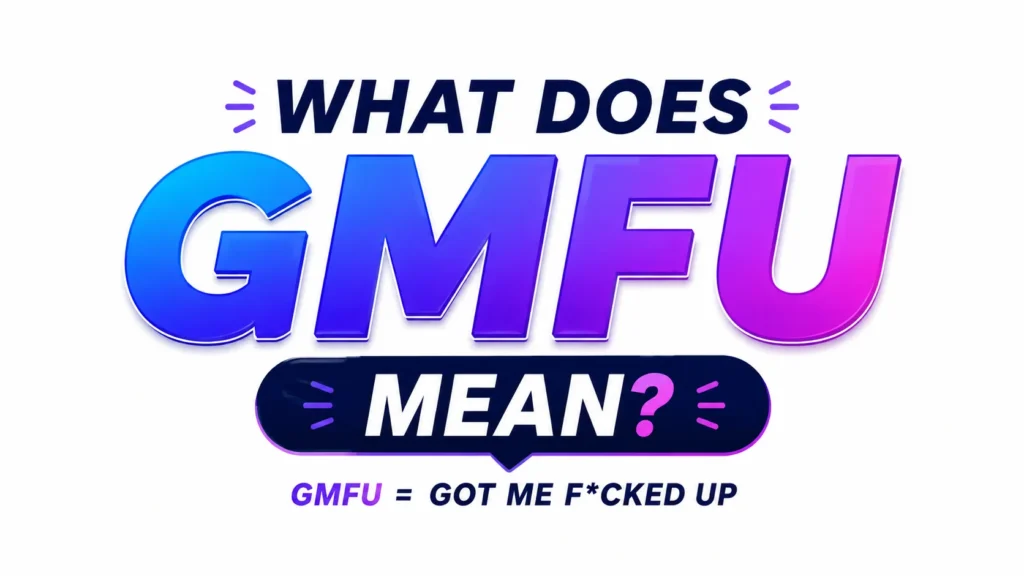
GMFU usually stands for:
“Got Me F*ed Up”**
It’s used when someone feels:
- Shocked
- Disrespected
- Confused
- Emotionally overwhelmed
- Angry
- Frustrated
- Betrayed
- Amazed in a negative way
The phrase is emotional slang. It expresses the feeling that a situation has pushed someone mentally or emotionally beyond comfort.
Simple Definition
When someone says:
“You really got me GMFU.”
They usually mean:
“You seriously upset me,”
“You crossed a line,”
or
“I can’t believe this is happening.”
Short Example Quotes
“Nah, this app update got me GMFU.”
“My friend cancelled last minute again. I’m GMFU.”
“You ate my fries without asking? GMFU.”
Depending on tone, the phrase can be playful, dramatic, or genuinely emotional.
Origin & Background
Where Did GMFU Come From?
GMFU developed from African American Vernacular English (AAVE), where emotionally expressive abbreviations and slang phrases often become part of wider internet culture.
The full phrase “got me f***ed up” existed long before texting culture. People used it in spoken conversations to express disbelief, disrespect, or emotional frustration.
As social media evolved, users shortened the phrase into GMFU for faster typing and stronger visual impact.
Social Media Influence
Platforms like TikTok, Twitter/X, Snapchat, and Instagram helped push the slang into mainstream culture.
Short emotional expressions spread quickly online because they fit perfectly into:
- Captions
- Reaction comments
- Memes
- Story replies
- Viral arguments
- Relationship content
GMFU became especially popular in:
- Drama videos
- Reaction memes
- Relationship posts
- Friendship betrayal content
- “Storytime” videos
How the Meaning Evolved
Originally, the phrase mostly expressed anger or disrespect.
Today, people also use GMFU humorously.
For example:
“This restaurant charging $9 for water got me GMFU.”
That sentence is frustrated, but also exaggerated for comedic effect.
Modern internet culture often mixes humor with emotional exaggeration, and GMFU fits perfectly into that style.
Real-Life Conversations
WhatsApp Conversation
Person A:
You’re telling me the concert sold out in 3 minutes?
And,
Person B:
YES 😭
Person A:
Nah that got me GMFU.
Instagram DM Conversation
Person A:
He viewed my story but ignored my message.
Or,
Person B:
That’s wild honestly.
Person A:
Exactly. He got me GMFU.
TikTok Comment Section
Person A:
“My boss asked me to stay late on Friday.”
Person B:
Nahhh they GMFU for that.
Text Message Conversation
Person A:
I accidentally sent the screenshot to the person we were talking about.
And,
Person B:
BROOOOO 😭😭
Person A:
I’m so serious. I’m GMFU right now.
These conversations show how the slang can express stress, disbelief, embarrassment, or emotional chaos in a very human way.
Emotional & Psychological Meaning
What Emotion Does GMFU Express?
GMFU usually communicates emotional overload.
The speaker feels mentally thrown off by something unexpected, unfair, disrespectful, or emotionally intense.
The emotion may include:
- Frustration
- Shock
- Hurt feelings
- Annoyance
- Emotional exhaustion
- Feeling misunderstood
- Social disappointment
Why People Use It
Internet slang helps people communicate emotions quickly.
Instead of writing:
“I feel deeply frustrated and emotionally upset by this situation.”
Someone simply types:
“GMFU.”
It feels faster, more expressive, and emotionally relatable.
What It Reveals About Modern Communication
Modern online communication values emotional immediacy.
People want language that feels:
- Raw
- Authentic
- Fast
- Relatable
- Emotionally charged
GMFU works because it captures a whole emotional state in just four letters.
A Realistic Personal-Style Scenario
Imagine spending hours getting ready for a birthday dinner only for your friends to cancel at the last minute.
You probably wouldn’t send a formal emotional paragraph.
You’d text:
“Y’all really got me GMFU rn.”
That short message instantly communicates disappointment, frustration, and emotional exhaustion.
Usage in Different Contexts
Social Media
On social platforms, GMFU is often dramatic, exaggerated, and expressive.
Examples:
- Reaction tweets
- Meme captions
- Viral relationship posts
- Comment section jokes
People sometimes use it for entertainment even when the situation isn’t serious.
Friends & Relationships
Among close friends, the phrase can feel playful.
Example:
“You ate the last slice? You GMFU.”
In relationships, though, it can sound more emotional or confrontational.
Example:
“Ignoring me all day got me GMFU.”
Tone matters heavily here.
Work or Professional Settings
GMFU is generally inappropriate in professional communication.
Avoid using it in:
- Work emails
- Meetings
- Academic writing
- Client messages
- Professional LinkedIn conversations
Because the phrase contains hidden profanity, it may appear disrespectful or immature in formal settings.
Casual vs Serious Tone
GMFU can shift dramatically depending on context.
Casual:
“This game difficulty got me GMFU 😂”
Serious:
“After everything I did, you still lied to me? GMFU.”
The second version carries genuine emotional pain.
When NOT to Use It
Professional Environments
Avoid using GMFU at work, especially with supervisors or clients.
Even abbreviated profanity can damage professionalism.
Formal Conversations
Do not use it in:
- School assignments
- Interviews
- Public speeches
- Customer support messages
- Official communication
Sensitive Situations
Because GMFU sounds emotionally aggressive, it may worsen tense conversations.
For example, during serious family conflict, the phrase may sound confrontational instead of constructive.
Cultural Sensitivity
Not everyone understands internet slang equally.
Older generations or non-native English speakers may misunderstand the phrase completely.
Some people may also find the implied profanity offensive.
Common Misunderstandings
People Think It Always Means Anger
Not necessarily.
Sometimes GMFU expresses playful frustration rather than real anger.
Tone Confusion
Online text lacks facial expressions and vocal tone.
As a result, someone jokingly saying:
“You got me GMFU 😂”
may accidentally sound genuinely upset.
Literal vs Figurative Meaning
Most users do not mean the phrase literally.
It’s usually emotional exaggeration.
For example:
“This weather got me GMFU.”
The speaker simply means they’re annoyed.
Comparison Table
| Expression | Meaning | Tone | Similarity to GMFU |
|---|---|---|---|
| WTF | Shock or disbelief | Abrupt | Very similar |
| SMH | Disappointment | Mild | Less emotional |
| I’m dead | Extreme amusement | Funny | Different emotion |
| Bruh | Frustration or disbelief | Casual | Sometimes similar |
| You trippin | Someone acting irrationally | Confrontational | Related |
| I’m done | Emotional exhaustion | Serious | Similar emotional tone |
| No way | Surprise | Neutral | Softer |
| That’s messed up | Disapproval | Calm | More polite |
Key Insight
GMFU stands out because it blends emotional intensity with internet-style shorthand. It feels stronger than “SMH” but more flexible than outright insults, which is why younger users gravitate toward it online.
Variations / Types
GMFU RN
Means:
“Got me f***ed up right now.”
Used for immediate emotional reactions.
You GMFU
Means someone personally upset or shocked you.
They GMFU
Used when talking about a group or situation causing frustration.
Lowkey GMFU
Expresses hidden or quieter frustration.
Highkey GMFU
Expresses obvious, intense frustration.
GMFU Fr
Means:
“Got me f***ed up for real.”
Adds seriousness.
GMFU Bad
Used when someone feels extremely upset or overwhelmed.
Why Y’all GMFU?
Questioning someone’s strange or disrespectful behavior.
This Got Me GMFU
Focused on a situation rather than a person.
Completely GMFU
A dramatic version emphasizing emotional exhaustion.
How to Respond When Someone Uses It
Casual Replies
- “I don’t blame you honestly.”
- “Yeah that’s messed up.”
- “I’d feel the same way.”
Funny Replies
- “Take a deep breath before you start a war 😂”
- “You surviving over there?”
- “Not the emotional damage 😭”
Mature Replies
- “I understand why you’re upset.”
- “Let’s talk about what happened.”
- “That situation would frustrate anyone.”
Respectful Replies
- “I hear you.”
- “That sounds disappointing.”
- “I get why you reacted that way.”
Your response should match the seriousness of the conversation.
Regional & Cultural Usage
Western Culture
In the United States and parts of Europe, GMFU is commonly understood among younger internet users.
It often appears in:
- Meme culture
- Hip-hop influenced slang
- TikTok reactions
- Casual texting
Asian Culture
In many Asian countries, English internet slang spreads through social media trends rather than daily speech.
Some users recognize GMFU online but may not fully understand its emotional intensity.
Middle Eastern Culture
Usage is more limited because abbreviated profanity can conflict with cultural communication norms.
Still, globally connected younger users may use it casually online.
Global Internet Usage
Internet culture now spreads slang internationally within hours.
A phrase that begins in one community can quickly appear in gaming chats, fandom spaces, and TikTok comment sections worldwide.
Generational Differences
Gen Z
Gen Z uses GMFU naturally in emotional or humorous online communication.
They often understand tone instantly.
Millennials
Many Millennials recognize the slang but may use it less frequently.
Some still prefer older expressions like:
- WTF
- SMH
- I’m done
Older generations may not understand the phrase at all.
Is It Safe for Kids?
Context Matters
GMFU contains implied profanity, even though the words are abbreviated.
For that reason, parents should understand that the phrase is not entirely harmless slang.
Is It Dangerous?
Usually no.
Most teens use it casually to express frustration or exaggeration.
However, it’s still important for kids to understand:
- Appropriate settings
- Respectful communication
- Emotional tone
- Audience awareness
Teaching context matters more than simply banning slang altogether.
FAQs
What does GMFU stand for in text?
GMFU usually stands for “Got Me F***ed Up.” It expresses frustration, disbelief, emotional shock, or feeling disrespected.
Is GMFU rude?
It can be. Because it contains implied profanity, some people may consider it offensive depending on the situation and tone.
Is GMFU popular on TikTok?
Yes. The phrase appears frequently in TikTok comments, memes, relationship videos, and emotional reaction posts.
Can GMFU be used jokingly?
Absolutely. Many people use it humorously when reacting to minor annoyances or funny situations.
What’s the difference between GMFU and SMH?
SMH usually expresses disappointment or disbelief mildly, while GMFU feels more emotionally intense and personal.
Should I use GMFU at work?
No. It’s considered informal slang with implied profanity, so it’s best avoided in professional environments.
Does GMFU always mean anger?
Not always. Sometimes it expresses shock, emotional exhaustion, playful frustration, or exaggerated humor instead of serious anger.
Conclusion
Understanding what GMFU means is really about understanding modern emotional communication online.
The phrase isn’t just slang. It’s a fast, emotionally loaded way for people to express frustration, disbelief, disappointment, or feeling overwhelmed in digital conversations.
Like many internet expressions, its meaning depends heavily on tone, context, and relationship dynamics. Between close friends, it may sound funny and harmless. In serious situations, though, it can carry genuine emotional weight.
The most important thing is knowing when and where to use it. Once you understand the emotional layer behind the phrase, it becomes much easier to recognize whether someone is joking, venting, or expressing real frustration.
Internet language changes constantly, but emotionally expressive slang like GMFU continues to grow because people want communication that feels immediate, relatable, and real