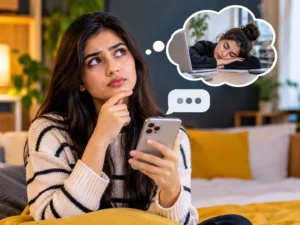
If you’ve ever received a text ending with “…” and suddenly started overthinking the conversation, you’re not alone.
Those three little dots — called an ellipsis — carry far more emotional weight in digital communication than most people realize. Depending on the context, they can sound thoughtful, awkward, passive-aggressive, mysterious, emotional, sarcastic, or even romantic.
That’s exactly why so many people search for “what does … mean in text.”
Unlike emojis or internet slang that usually have one clear definition, the meaning of “…” changes based on tone, timing, relationship, and platform. A simple message like:
“Okay…”
can feel completely different from:
“Okay!”
or
“Okay.”
In modern texting culture, punctuation has become emotional language. The ellipsis is one of the strongest examples of that shift.
This guide breaks down what “…” really means in texts, social media, relationships, and everyday online communication — in a way that feels practical, human, and easy to understand.
“…” Meaning in Text – Quick Meaning
Simple Definition
In texting, “…” usually represents a pause, unfinished thought, hesitation, emotional tension, or implied meaning.
It often signals that the sender feels something beyond the actual words they typed.
Common Meanings of “…”
- Hesitation
- Suspense
- Awkwardness
- Passive aggression
- Sadness
- Deep thought
- Flirting
- Emotional distance
- Wanting the other person to continue the conversation
Quick Examples
“I guess that’s fine…”
Meaning: They may not actually be fine with it.
Moreover,
“So… what happened?”
Meaning: Curiosity mixed with emotional tension.
“Wow…”
Meaning: Surprise, disappointment, shock, or disbelief depending on tone.
Origin & Background
The Original Purpose of the Ellipsis
The ellipsis existed long before smartphones.
In traditional writing, it was used to show:
- Missing words
- Pauses in speech
- Unfinished thoughts
- Dramatic tension
Writers used it in novels and scripts to create emotion or suspense.
For example:
“I never thought you would…”
The sentence feels emotionally incomplete on purpose.
How Texting Changed Its Meaning
Once texting became part of daily life, punctuation started carrying emotional signals.
People no longer used grammar only for structure. They used it to express mood.
A period became “cold.”
An exclamation mark became “excited.”
And “…” became emotionally loaded.
That transformation became especially noticeable during the rise of:
- MSN Messenger
- AOL chats
- BBM
- Twitter/X
- Instagram DMs
- TikTok comments
Social Media Influence
Social media intensified emotional interpretation.
Short-form messaging forced people to communicate tone quickly. Since facial expressions and voice weren’t available, punctuation filled the gap.
Today, younger users often interpret “…” emotionally rather than grammatically.
For example:
- Millennials may see it as normal writing.
- Gen Z may interpret it as uncomfortable or dramatic.
That generational difference causes a surprising amount of misunderstanding online.
Real-Life Conversations
WhatsApp Conversation
Person A:
“Did you tell Sarah what happened?”
And,
Person B:
“Not yet…”
Person A:
“Oh wow. You’re nervous, aren’t you?”
The ellipsis here shows hesitation and emotional pressure.
Instagram DM
Person A:
“You looked really happy with him…”
Person B:
“I was…”
This creates emotional depth without directly explaining feelings.
TikTok Comments
Person A:
“This ending destroyed me…”
Person B:
“Same…”
In this case, “…” expresses lingering emotion and shared sadness.
Text Message Between Friends
Person A:
“So you’re actually moving away?”
Or,
Person B:
“Yeah…”
Person A:
“That hurts.”
The dots soften the statement while showing emotional weight.
Emotional & Psychological Meaning
Why “…” Feels So Emotional
Humans naturally fill silence with interpretation.
In real life, pauses during conversation often signal:
- Uncertainty
- Sadness
- Reflection
- Tension
- Hidden emotion
The ellipsis recreates that silence digitally.
That’s why it can feel emotionally intense even when the words themselves are simple.
What It Often Reveals
Using “…” may suggest:
- The person is thinking carefully
- They feel awkward
- They don’t want to say everything directly
- They expect emotional understanding
- They want a softer tone
Sometimes it’s intentional.
Sometimes it’s subconscious.
A Realistic Scenario
Imagine texting someone after an argument.
If they reply:
“Sure…”
you instantly sense something feels wrong.
Even though the word “sure” sounds positive, the ellipsis changes the emotional atmosphere entirely.
That’s the power of digital tone.
Usage in Different Contexts
Social Media
On social platforms, “…” often adds drama or emotional suspense.
Examples:
- “This generation is wild…”
- “Not him doing that again…”
- “I wasn’t expecting this…”
It creates curiosity and encourages engagement.
Friends & Relationships
Among close friends or romantic partners, “…” can signal:
- Emotional vulnerability
- Sadness
- Flirting
- Disappointment
- Indirect communication
For example:
“I miss you…”
feels softer and more emotional than:
“I miss you.”
Work & Professional Settings
In professional communication, excessive ellipses can seem unclear or passive-aggressive.
Example:
“We should discuss this…”
This might unintentionally sound negative or intimidating.
Professional environments usually prefer direct communication.
Better alternative:
“Let’s discuss this tomorrow.”
Casual vs Serious Tone
Casual:
“Wait… really?”
Serious:
“I don’t know if this is going to work…”
Tone depends heavily on context and relationship.
When NOT to Use It
Professional Emails
Using “…” repeatedly in work communication can create confusion.
It may sound:
- Uncertain
- Passive-aggressive
- Emotionally charged
- Unprofessional
During Sensitive Conversations
In emotionally tense situations, ellipses may worsen misunderstandings.
For example:
“Fine…”
can sound resentful instead of calm.
Cross-Cultural Communication
Some cultures interpret indirect communication differently.
What feels thoughtful in one culture may seem rude or manipulative in another.
Overuse Creates Drama
Using “…” after every sentence can make conversations feel emotionally exhausting.
Example:
“Hey… how are you… I was thinking…”
Too many pauses reduce clarity.
Common Misunderstandings
People Assume It Means Anger
Not always.
Some people simply type naturally with ellipses because that’s how they learned digital communication.
Older generations especially use it casually.
Tone Changes by Age Group
Gen Z often sees “…” as emotionally intense.
Millennials and older users may view it as normal punctuation.
That difference creates accidental tension.
Literal vs Figurative Meaning
Literally, an ellipsis represents a pause.
Emotionally, it can imply:
- Disappointment
- Mystery
- Flirting
- Frustration
- Reflection
The emotional meaning usually matters more in texting.
Comparison Table
| Expression | Typical Meaning | Emotional Tone |
|---|---|---|
| … | Pause or implied emotion | Thoughtful, awkward, emotional |
| . | Final statement | Direct or cold |
| ! | Excitement | Energetic or friendly |
| ?? | Confusion or urgency | Intense curiosity |
| lol | Humor or softening tone | Casual and friendly |
| hmm | Thinking deeply | Curious or uncertain |
| okay… | Hidden emotion | Possibly upset |
| okay! | Positive response | Enthusiastic |
| idk | Uncertainty | Neutral or casual |
| whatever | Dismissive attitude | Detached or annoyed |
Key Insight
The ellipsis is powerful because it leaves emotional space for interpretation. That ambiguity is exactly why people react so strongly to it in digital conversations.
Variations / Types
“Okay…”
Short meaning: Hesitant agreement
Explanation: Suggests emotional resistance or disappointment.
“Well…”
Short meaning: Reflective pause
Explanation: Often introduces an awkward or complicated response.
“So…”
Short meaning: Expectation or tension
Explanation: Implies there’s more to discuss.
“Um…”
Short meaning: Nervous hesitation
Explanation: Used when someone feels uncertain or uncomfortable.
“I mean…”
Short meaning: Clarification pause
Explanation: Softens opinions or corrections.
“Anyway…”
Short meaning: Emotional transition
Explanation: Often shifts away from uncomfortable topics.
“Wow…”
Short meaning: Shock or disbelief
Explanation: Can be positive or negative depending on context.
“Sure…”
Short meaning: Reluctant agreement
Explanation: Frequently interpreted as passive-aggressive.
“Right…”
Short meaning: Doubt or skepticism
Explanation: Suggests disbelief or emotional distance.
“Interesting…”
Short meaning: Hidden judgment
Explanation: Sometimes polite, sometimes suspicious.
How to Respond When Someone Uses It
Casual Replies
- “What’s on your mind?”
- “You sound unsure.”
- “Tell me the rest.”
Funny Replies
- “Those dots are threatening me.”
- “Why does that feel dramatic?”
- “The suspense is killing me.”
Mature Replies
- “I feel like there’s more you want to say.”
- “Let’s talk honestly.”
- “I want to understand what you mean.”
Respectful Replies
- “Take your time.”
- “I’m listening.”
- “No pressure if you don’t want to explain.”
Regional & Cultural Usage
Western Culture
In Western texting culture, “…” often expresses emotional subtlety or sarcasm.
It’s heavily tied to personal tone.
Asian Culture
In many Asian communication styles, indirect wording is more common.
Ellipses may feel polite, thoughtful, or emotionally restrained rather than negative.
Middle Eastern Culture
In Middle Eastern digital communication, emotional expression often carries warmth and relationship depth.
“…” may be used dramatically or affectionately during personal conversations.
Global Internet Usage
Across the internet, “…” has become universal shorthand for:
- Emotional tension
- Unfinished thought
- Dramatic pause
- Humor with subtle emotion
Generational Differences
Gen Z
- Often interprets “…” as awkward or emotionally loaded
- Prefers shorter, cleaner texts
Millennials
- More likely to use “…” casually
- Grew up during older messaging platforms
That generational gap explains many online misunderstandings today.
Is It Safe for Kids?
Generally, Yes
The ellipsis itself is harmless.
It’s simply punctuation used emotionally in digital communication.
What Parents Should Understand
The emotional meaning behind “…” depends on context.
For example:
- “I’m okay…” may signal sadness.
- “Come here…” could be playful or manipulative depending on who says it.
Teaching kids emotional awareness in online communication matters more than banning certain symbols.
FAQs
Does “…” always mean someone is upset?
No. Sometimes it simply represents a pause or thoughtful tone. Context matters more than the symbol itself.
Why does “okay…” feel rude?
Because the ellipsis creates emotional ambiguity. Many people interpret it as hidden disappointment or passive aggression.
Is using “…” outdated?
Not at all. It’s still widely used, although younger generations may interpret it differently than older users.
Can “…” be flirty?
Yes. In romantic conversations, it can create tension, softness, or emotional intimacy.
Example:
“Maybe I was thinking about you…”
Why do older people use ellipses so much?
Many older texters learned digital communication during earlier internet eras where ellipses were common conversational punctuation.
Is “…” better than using emojis?
They serve different purposes.
Ellipses create subtle emotional tone, while emojis communicate feelings more directly.
Does “…” mean silence?
Sometimes. It often represents the feeling of silence rather than actual silence itself.
Conclusion
The meaning of “…” in text goes far beyond simple punctuation.
Those three dots can express hesitation, sadness, mystery, sarcasm, affection, awkwardness, or emotional depth — sometimes all at once. That complexity is what makes digital communication so fascinating today.
Modern texting isn’t only about words anymore. It’s about tone, timing, pauses, and emotional signals hidden inside tiny details.
Understanding the emotional language behind “…” helps you read conversations more clearly and communicate with greater confidence. Once you notice how people use it, you’ll start seeing entire emotional subtexts hidden between the lines.
And honestly… that’s part of what makes texting feel so human.