If you spend time on TikTok, Instagram, Snapchat, or texting friends late at night, you’ve probably seen someone type “wtv” and wondered what they actually meant.
At first glance, it looks casual and harmless. Yet depending on the tone, context, and relationship between people, “wtv” can sound playful, dismissive, emotional, annoyed, relaxed, or even passive-aggressive.
That confusion is exactly why so many people search for the phrase “wtv meaning in text.”
Modern texting culture moves fast. People shorten words to save time, express emotion indirectly, or avoid sounding too serious. Sometimes a tiny abbreviation carries more emotional weight than a full sentence.
In this guide, you’ll learn what “wtv” means, where it came from, how people use it emotionally, and when you should avoid using it altogether.
WTV Meaning in Text – Quick Meaning
Simple Definition
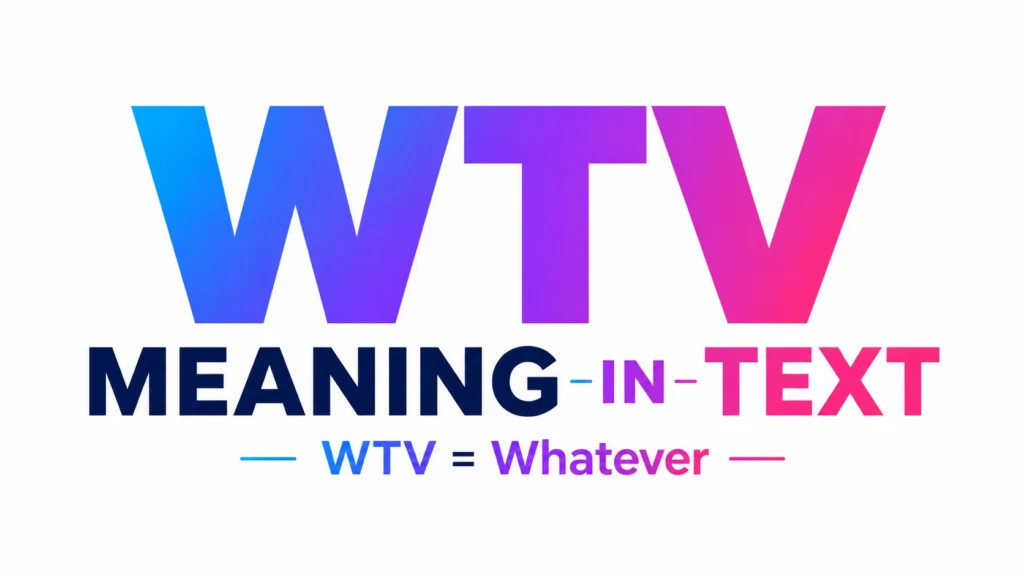
“WTV” usually means:
- “Whatever”
It’s a shortened slang version commonly used in texting and online conversations.
People use it when they want to:
- Sound casual
- End a conversation quickly
- Show indifference
- Avoid typing the full word
- Express frustration without explaining too much
Common Emotional Meanings
Depending on tone, “wtv” can mean:
- “I don’t care.”
- “It’s fine.”
- “Do whatever you want.”
- “I’m done arguing.”
- “Anything works for me.”
Quick Examples
“Wtv, we can go tomorrow.”
“You never listen anyway… wtv.”
“I’m hungry. Wtv food is okay.”
The same slang can sound calm in one message and emotionally cold in another.
That’s why context matters so much.
Origin & Background
Where “WTV” Came From
“WTV” developed from the word “whatever,” which became popular in casual American speech during the 1990s and early 2000s.
As texting culture evolved, people naturally shortened common words:
- “you” became “u”
- “because” became “bc”
- “whatever” became “wtv”
The rise of smartphones accelerated this habit because users wanted faster communication.
Social Media Influence
Platforms like TikTok, Snapchat, Instagram, and X transformed short slang into a communication style of its own.
Gen Z especially prefers language that feels:
- Fast
- emotionally layered
- low-pressure
- slightly ironic
- conversational
“Wtv” fits perfectly into that culture.
Instead of writing:
“I don’t really mind what we do.”
People simply type:
“wtv”
How the Meaning Evolved
Originally, “whatever” often sounded rude or dismissive.
Over time, “wtv” became softer in some situations.
Today, it can mean:
- relaxed flexibility
- emotional exhaustion
- sarcasm
- playful indifference
- emotional protection
That emotional flexibility is what makes modern slang fascinating.
Real-Life Conversations
WhatsApp Conversation
Person A:
“Are you still mad at me?”
Person B:
“Wtv. It’s okay now.”
Here, “wtv” sounds emotionally tired rather than aggressive.
Instagram DM
Person A:
“You looked amazing in those pictures.”
Person B:
“Stoppp lol wtv 😭”
In this case, it’s playful and shy.
TikTok Comments
Person A:
“This song changed my life.”
Person B:
“Wtv this song still hits after years.”
Here, it expresses admiration in a casual tone.
Text Message Between Friends
Person A:
“You always cancel plans last minute.”
Person B:
“Wtv. I said I was busy.”
This version feels defensive and slightly irritated.
Emotional & Psychological Meaning
What Emotion Does “WTV” Express?
One reason slang spreads so quickly is because people use it to soften emotions.
“Wtv” often hides feelings people don’t want to explain directly.
It can express:
- disappointment
- emotional distance
- awkwardness
- sarcasm
- resignation
- emotional fatigue
Sometimes people type “wtv” because saying the full truth feels too vulnerable.
Why People Use It
Modern communication is heavily emotional but also emotionally guarded.
People want connection while protecting themselves from embarrassment or conflict.
“Wtv” creates emotional distance.
Instead of saying:
“I’m hurt by what you said.”
Someone might simply reply:
“wtv.”
That one word becomes a shield.
What It Reveals About Modern Communication
Digital communication encourages shorter emotional expressions.
People often:
- hide seriousness behind humor
- mask pain with sarcasm
- avoid confrontation
- communicate indirectly
“Wtv” reflects that cultural shift perfectly.
A Real-Life Style Scenario
A college student spends hours waiting for a reply from someone they like.
Finally, the other person responds with:
“sorry i forgot lol”
The student types:
“wtv”
What they really mean might be:
“I’m upset, but I don’t want to sound needy.”
That emotional layering is extremely common in texting culture today.
Usage in Different Contexts
Social Media
On TikTok, Instagram, and Snapchat, “wtv” often sounds casual and trendy.
Examples:
- “Wtv this trend is funny.”
- “Wtv I’m obsessed with this outfit.”
In these situations, the tone is usually lighthearted.
Friends & Relationships
Among friends, “wtv” can signal flexibility:
“Wtv you wanna eat is fine.”
However, in arguments, it can sound cold:
“Wtv. Do what you want.”
Tone completely changes the meaning.
Work or Professional Settings
Using “wtv” professionally is usually risky.
In workplace communication, it may appear:
- dismissive
- careless
- immature
- disrespectful
For example:
“Wtv works for the meeting.”
This sounds less professional than:
“Any option works for me.”
Casual vs Serious Tone
Casual tone:
“Wtv movie is okay.”
Serious tone:
“Wtv. I’m done explaining.”
The emotional difference is huge even though the same slang is used.
When NOT to Use It
Professional Communication
Avoid “wtv” in:
- emails
- job applications
- academic writing
- workplace chats
- client communication
It may damage credibility.
Emotional Conversations
If someone is expressing genuine pain or vulnerability, replying with “wtv” can feel hurtful.
For example:
Person A:
“I’ve been struggling mentally lately.”
Bad response:
“wtv”
That can sound emotionally disconnected.
Cultural Sensitivity
Some cultures value direct respect and emotional politeness more strongly.
In those environments, “wtv” may appear rude even when unintended.
During Conflict
Using “wtv” in arguments often escalates tension because it signals emotional withdrawal.
It can make the other person feel ignored or invalidated.
Common Misunderstandings
People Assume It Always Means “I Don’t Care”
That’s not always true.
Sometimes “wtv” simply means:
“I’m okay with anything.”
Tone matters more than the letters themselves.
Tone Confusion
Without facial expressions or voice tone, texting creates misunderstanding easily.
“wtv” may look:
- angry
- sarcastic
- playful
- exhausted
Different readers interpret it differently.
Literal vs Emotional Meaning
Literal meaning:
“Whatever.”
Emotional meaning could actually be:
- “I’m hurt.”
- “I’m tired.”
- “I’m trying to stay calm.”
- “I genuinely don’t mind.”
That emotional complexity is why texting slang often causes confusion.
Comparison Table
| Expression | Meaning | Tone | Usage Style |
|---|---|---|---|
| WTV | Whatever | Casual / emotional | Texting & social media |
| IDC | I don’t care | Direct | More blunt |
| NVM | Never mind | Withdrawn | Ending conversation |
| LOL | Laughing | Friendly | Softens tone |
| Bet | Okay / agreed | Positive | Casual slang |
| Fine | Acceptance or irritation | Depends on tone | Everyday conversation |
| Sure | Agreement | Neutral | More polite |
| Whatever | Full version of WTV | Stronger emotionally | Spoken & written |
Key Insight
“Wtv” is emotionally flexible. It can sound relaxed, defensive, playful, or dismissive depending on timing, punctuation, and relationship dynamics.
Variations / Types
Wtv bro
Means casual dismissal between friends.
Wtv lol
Softens the tone with humor.
Wtv then
Usually signals frustration or disappointment.
Wtv u want
Means flexibility or emotional surrender.
Wtv ig
Adds uncertainty or emotional hesitation.
Wtv man
Common in casual arguments.
Wtv honestly
Shows emotional exhaustion.
Wtv it’s fine
Often means the person is actually not fine.
Wtv happens
Expresses acceptance of uncertainty.
Wtv works
Used when someone has no strong preference.
How to Respond When Someone Uses It
Casual Replies
- “Alright sounds good.”
- “Cool with me too.”
- “Okay let’s do that.”
Funny Replies
- “The legendary wtv has appeared.”
- “That sounded slightly dramatic 😂”
- “You typed wtv but I know you care.”
Mature Replies
- “You seem upset. Want to talk about it?”
- “I can’t tell your tone here.”
- “I just want us to understand each other.”
Respectful Replies
- “No pressure. We can decide later.”
- “I understand.”
- “That’s completely okay.”
Regional & Cultural Usage
Western Culture
In Western online culture, “wtv” is widely normalized.
It’s especially common among:
- Gen Z
- college students
- gaming communities
- social media users
The tone is often casual and emotionally indirect.
Asian Culture
In many Asian cultures, direct emotional confrontation is often avoided.
Because of that, “wtv” may sometimes be used to quietly express discomfort without open conflict.
However, it can also feel disrespectful toward elders or authority figures.
Middle Eastern Culture
In Middle Eastern communication styles, tone and respect are highly important.
Using “wtv” with close friends may feel harmless, but using it formally can sound dismissive.
Relationship hierarchy matters heavily.
Global Internet Usage
Online culture has made slang globally recognizable.
Even non-native English speakers now use “wtv” because internet language spreads quickly through:
- memes
- TikTok
- gaming
- streaming communities
- online fandoms
Generational Differences
Gen Z often uses “wtv” casually without strong emotional intention.
Millennials may interpret it more negatively because “whatever” historically carried a ruder tone.
That generational gap creates interesting misunderstandings online.
Is It Safe for Kids?
Context Matters More Than the Word
“Wtv” itself is not dangerous or inappropriate.
It’s simply slang for “whatever.”
However, parents should still understand how tone works in digital communication.
Kids sometimes use slang to:
- hide emotions
- avoid difficult conversations
- express frustration indirectly
Understanding emotional context is more important than policing the abbreviation itself.
FAQs
What does WTV mean in text?
wtv meaning in text” usually means “whatever.” It’s commonly used in texting and social media conversations.
Is WTV rude?
Not always. wtv meaning in text”, Sometimes it’s playful or casual. Yet in emotional conversations, it may sound dismissive or irritated.
What does WTV mean from a girl?
It depends entirely on context and tone. It could mean flexibility, annoyance, sarcasm, or emotional distance.
Is WTV the same as IDC?
No. “IDC” directly means “I don’t care,” while “wtv” can have softer or more emotional meanings.
Can I use WTV at work?
It’s better to avoid it in professional communication because it may appear unprofessional or careless.
Why do Gen Z use WTV so much?
Gen Z communication values speed, emotional subtlety, and casual expression. “Wtv” fits naturally into that style.
Does WTV always mean anger?
No. It can also mean relaxation, flexibility, humor, or emotional tiredness.
Conclusion
“Wtv” may look like a tiny piece of internet slang, but it carries surprisingly deep emotional meaning.
Sometimes it’s casual. Sometimes it’s defensive. Other times, it quietly hides disappointment, exhaustion, or emotional vulnerability.
That’s what makes modern texting language so interesting. A short abbreviation can communicate an entire mood without directly saying it.
Understanding “wtv meaning in text” isn’t just about learning slang. It’s about understanding how people connect, protect themselves, and express emotion in digital conversations today.
Used thoughtfully, “wtv” can sound relaxed and natural.
Used carelessly, it can create misunderstanding.
The key is simple: pay attention to context, tone, and relationship dynamics.
Once you understand those layers, you’ll never read “wtv” the same way again.