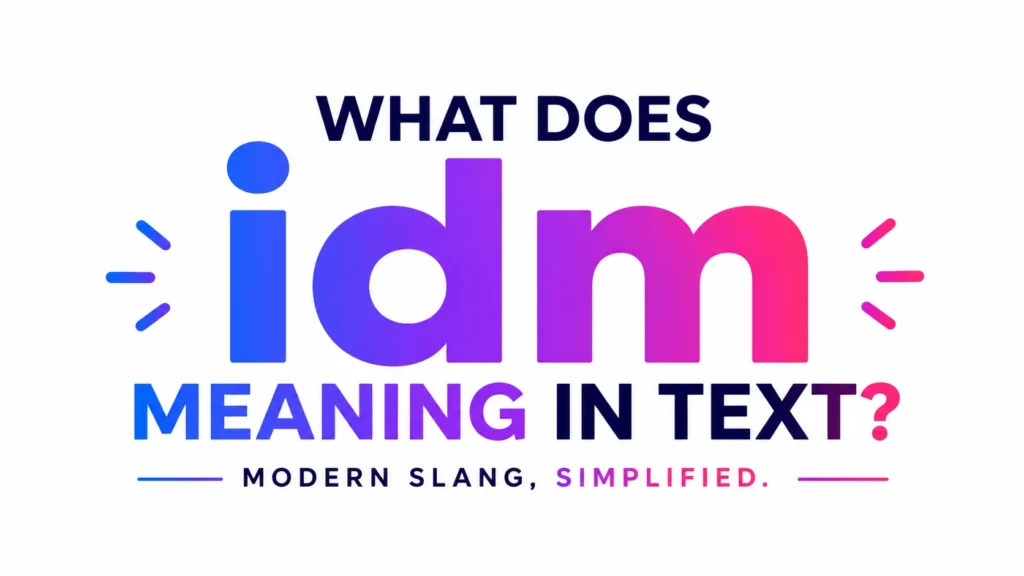
If you’ve spent time on TikTok, Instagram, Snapchat, or WhatsApp lately, there’s a good chance you’ve seen someone type “idm” in a conversation and wondered what it actually means.
At first glance, it can feel confusing because internet slang changes fast. One small abbreviation can completely change the tone of a message. That’s exactly why people search for “idm meaning in text” so often. They want to understand whether it sounds rude, casual, cold, polite, or emotionally distant.
In most situations, “idm” simply means “I don’t mind.”
It’s a short, relaxed way of showing flexibility or agreement in a conversation. But like many modern texting expressions, the emotional tone behind it depends heavily on context, punctuation, and the relationship between the people talking.
Sometimes it sounds caring and easygoing.
Sometimes it sounds emotionally detached.
And sometimes it quietly reveals how people avoid conflict in digital communication.
That’s what makes this slang term so interesting. It’s small, but socially powerful.
IDM Meaning in Text – Quick Meaning
“IDM” stands for:
- I Don’t Mind
- Used to show flexibility, agreement, or lack of strong preference
- Common in texting, DMs, gaming chats, and social media comments
People often use it when they’re okay with something but don’t feel strongly either way.
Simple Examples
“We can watch either movie idm.”
“Idm staying home tonight honestly.”
“Pick wherever you want to eat, idm.”
In most cases, it creates a calm, low-pressure tone.
But depending on how it’s written, it can also sound uninterested or emotionally distant.
For example:
- “idm :)” feels friendly
- “idm.” can feel cold or passive
- “IDM LOL” sounds playful and relaxed
Tiny differences matter online.
Origin & Background
The phrase “I don’t mind” existed long before texting culture. People have used it in spoken English for generations to show politeness and flexibility.
But the shortened version “idm” became popular during the rise of instant messaging and mobile texting.
As communication moved from long conversations to fast replies, people naturally started shortening common phrases:
- “I don’t know” became “idk”
- “To be honest” became “tbh”
- “No problem” became “np”
- “I don’t mind” became “idm”
The abbreviation gained momentum through:
- MSN Messenger
- Early SMS texting
- Snapchat streak culture
- TikTok comments
- Instagram DMs
- Gaming chats
- Discord communities
Social media accelerated the trend because people wanted faster, emotionally lighter communication.
Interestingly, “idm” became especially common among younger users who prefer soft, non-confrontational responses. Instead of directly choosing something, they often use “idm” to keep the mood relaxed and avoid unnecessary tension.
That reflects a deeper shift in digital communication culture.
Modern texting often values emotional safety over directness.
Real-Life Conversations
WhatsApp Conversation
Choosing Dinner Plans
Person A:
“Do you wanna order pizza or burgers?”
Or
Person B:
“Idm honestly, you pick today.”
Person A:
“You always say that 😭”
and
Person B:
“Because I genuinely like both lol.”
This version feels warm and easygoing.
Instagram DM Conversation
Emotionally Distant Reply
Person A:
“Do you still wanna hang out later?”
Or
Person B:
“idm”
Person A:
“Oh… okay.”
Here, the lack of punctuation or emotion makes the message feel detached, even if that wasn’t the intention.
TikTok Comment Section
Casual Social Media Usage
Person A:
“This song is overrated.”
Person B:
“Idm it honestly. It’s catchy.”
Person C:
“Same, not amazing but not bad either.”
In comment sections, “idm” often means neutral acceptance rather than strong approval.
Text Message Conversation
Relationship Context
Person A:
“You can tell me if you don’t want to come.”
and
Person B:
“Noo idm going with you.”
Person A:
“Okay good because I wanted you there.”
This version feels reassuring and emotionally softer.
Emotional & Psychological Meaning
At a deeper level, “idm” is more than just shorthand.
It reflects how people manage emotions in modern digital conversations.
Why People Use It
People often use “idm” because it feels:
- Less aggressive
- Less controlling
- More relaxed
- Emotionally safe
- Socially flexible
It allows someone to participate in a conversation without sounding demanding.
In friendships and relationships, that can help maintain harmony.
But there’s another side to it.
Sometimes people use “idm” to hide uncertainty or emotional hesitation.
Instead of openly saying what they want, they avoid pressure by appearing neutral.
The Hidden Emotional Layer
Digital communication has changed how people express emotions.
Many younger users fear sounding:
- Too intense
- Too needy
- Too emotional
- Too controlling
So they soften their language with phrases like:
- “idm”
- “whatever works”
- “up to you”
- “all good”
These phrases reduce emotional risk.
A Realistic Scenario
Imagine someone asking their partner:
“Do you actually want to spend time with me tonight?”
If the reply is:
“idm”
…it can create confusion.
The words technically sound agreeable, but emotionally they may feel lukewarm.
That’s why tone matters so much in texting culture.
Usage in Different Contexts
Social Media
On platforms like TikTok, Instagram, and X, “idm” is usually casual and neutral.
Examples:
- “Idm this trend honestly.”
- “Idm the new update.”
- “Idm her music.”
It often means mild approval without strong enthusiasm.
Friends & Relationships
Among close friends, “idm” can sound comfortable and relaxed.
Example:
“Idm where we go tonight.”
But in emotional conversations, it may accidentally sound careless.
Especially if someone expects enthusiasm or reassurance.
Work & Professional Settings
Using “idm” professionally depends on the workplace culture.
In casual internal chats, it may be acceptable:
“Idm joining the later meeting.”
But in formal communication, writing the full phrase is usually better:
“I don’t mind adjusting the schedule.”
Professional settings value clarity and warmth over shorthand slang.
Casual vs Serious Tone
Casual Tone
“Idm lol”
Feels relaxed and friendly.
Serious Tone
“idm.”
Can feel emotionally flat or passive-aggressive.
This is why punctuation completely changes perception online.
When NOT to Use It
Professional Emails
Avoid “idm” in formal emails, academic writing, or professional documents.
It may appear lazy or overly casual.
Instead write:
- “I don’t mind”
- “That works for me”
- “I’m comfortable with either option”
Emotionally Sensitive Conversations
If someone is discussing feelings, vulnerability, or relationship concerns, “idm” may sound emotionally disconnected.
Example:
Bad response:
“idm”
Better response:
“I’d genuinely like to be there with you.”
The second option feels emotionally present.
Cultural Misunderstandings
Some people interpret “idm” as passive disinterest rather than flexibility.
That misunderstanding happens often in cross-cultural communication where direct emotional expression varies.
Common Misunderstandings
People Think It Means “I Don’t Care”
This is the biggest confusion.
“I don’t mind” does not automatically mean “I don’t care.”
Usually, it means:
“I’m okay with either option.”
That’s softer and more cooperative.
Tone Gets Misread
Text removes facial expressions, body language, and voice tone.
So:
“idm”
can easily sound colder than intended.
Adding warmth helps:
- “idm 😊”
- “Idm honestly!”
- “Idm either way haha”
Literal vs Emotional Meaning
Literally, “idm” means acceptance.
Emotionally, though, it may communicate:
- low enthusiasm
- emotional distance
- politeness
- flexibility
- avoidance of conflict
Context decides everything.
Comparison Table
| Expression | Meaning | Tone | Emotional Energy |
| IDM | I don’t mind | Flexible | Neutral |
| IDC | I don’t care | Dismissive | Low |
| IMO | In my opinion | Thoughtful | Medium |
| TBH | To be honest | Honest/blunt | Medium |
| Sure | Agreement | Friendly | Medium |
| Whatever | Indifferent | Sometimes rude | Low |
| Up to you | Flexible choice | Soft | Neutral |
| Sounds good | Positive agreement | Warm | Higher |
Key Insight
“IDM” sits in a unique middle ground. It’s softer than “I don’t care,” but less emotionally expressive than enthusiastic agreement. That balance is why it became so popular in texting culture.
Variations / Types
IDRC
Meaning
“I don’t really care.”
Explanation
More emotionally detached than “idm.”
IDK
Meaning
“I don’t know.”
Explanation
Used for uncertainty rather than flexibility.
IDC
Meaning
“I don’t care.”
Explanation
Can sound harsh depending on tone.
NVM
Meaning
“Never mind.”
Explanation
Often used when someone gives up explaining something.
Up to You
Meaning
You decide.
Explanation
A more complete version of “idm.”
Whatever Works
Meaning
Any option is fine.
Explanation
Professional-friendly alternative.
Fine by Me
Meaning
Agreement or acceptance.
Explanation
Slightly warmer than “idm.”
I’m Good Either Way
Meaning
No strong preference.
Explanation
Sounds more emotionally reassuring.
Sure
Meaning
Agreement.
Explanation
Can sound enthusiastic or reluctant depending on punctuation.
All Good
Meaning
Everything is okay.
Explanation
Common in relaxed online communication.
How to Respond When Someone Uses It
Casual Replies
- “Cool, let’s do that then.”
- “Okay sounds good.”
- “Bet 😎”
Funny Replies
- “You’re emotionally mysterious today.”
- “One day you’ll actually choose something.”
- “Classic idm response 😂”
Mature Replies
- “I appreciate you being flexible.”
- “Let me know if you actually prefer something though.”
Respectful Replies
- “Thanks for being open about it.”
- “I just wanted to make sure you were comfortable too.”
These responses help keep communication emotionally balanced.
Regional & Cultural Usage
Western Culture
In Western texting culture, “idm” usually signals relaxed independence and flexibility.
It’s common among Gen Z and Millennials who value low-pressure communication.
Asian Culture
In many Asian cultures, indirect communication is socially important.
Because of that, “idm” fits naturally into polite conversational habits where avoiding conflict matters.
Middle Eastern Culture
In Middle Eastern conversations, tone and warmth are often highly valued.
So a dry “idm” without emojis or explanation may occasionally seem emotionally distant.
Adding warmth helps:
“Idm 😊”
Global Internet Usage
Online culture has made “idm” internationally recognizable.
Even non-native English speakers frequently use it in gaming, social apps, and international group chats.
Generational Differences
Gen Z
Uses “idm” casually and frequently.
Often paired with emojis, lowercase typing, and soft communication styles.
Millennials
Understand it easily but may interpret short replies more emotionally.
Some Millennials still prefer fuller responses for clarity.
Is It Safe for Kids?
Yes, “idm” is generally safe for kids.
It’s considered harmless internet slang and does not contain explicit or offensive meaning.
However, parents should still teach children about digital tone and communication clarity. Even innocent abbreviations can create misunderstandings if used carelessly.
Helping kids understand emotional context online is just as important as understanding vocabulary.
FAQs
What does idm mean in texting?
“IDM” usually means “I don’t mind.” It shows flexibility or lack of strong preference in a conversation.
Is idm rude?
Not usually. But if written very dryly, it can sometimes sound emotionally distant or uninterested.
What’s the difference between idm and idc?
“IDM” means you’re okay with something. “IDC” means you don’t care at all, which can sound harsher.
Is idm positive or negative?
It’s mostly neutral. The emotional tone depends on context, punctuation, and relationship dynamics.
Do people still use idm in 2026?
Yes. It remains common across TikTok, Instagram, WhatsApp, Snapchat, Discord, and casual texting culture.
Can idm be used professionally?
In very casual work chats, sometimes yes. But full phrases like “I don’t mind” sound more professional.
Why does idm sometimes feel cold?
Because short text responses lack voice tone and facial expressions. Without emotional cues, readers may assume distance or disinterest.
Conclusion
The meaning of “idm” in text may seem simple at first, but it reveals a lot about modern communication culture.
On the surface, it just means “I don’t mind.”
But emotionally, it often reflects flexibility, emotional caution, social politeness, or a desire to keep conversations easygoing and low-pressure.
That’s why context matters so much.
A warm “idm 😊” can feel caring and relaxed.
A cold “idm.” can feel distant.
Understanding these small emotional differences helps people communicate more clearly in a world where most conversations happen through screens.
And honestly, that’s the real power of internet slang today. Tiny words carry surprisingly big emotional weight.
Use “idm” naturally, pay attention to tone, and you’ll understand modern texting culture far better than most people realize.